





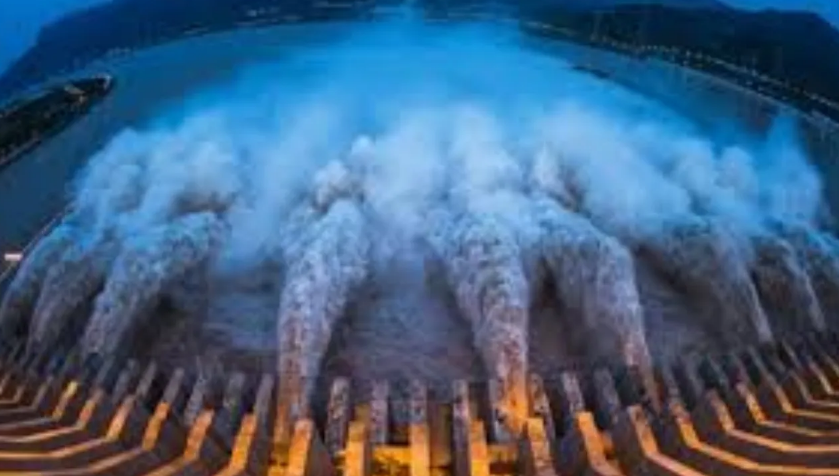
China’s ambitious hydropower project on the Yarlung Tsangpo river, often described as an engineering marvel comparable to the Three Gorges Dam, is emerging as a major source of concern for India. The project, which is expected to become the world’s largest hydropower facility, is being built amid allegations of inadequate transparency from Beijing.
Chinese President Xi Jinping has stated that the project aims to strengthen China’s national security. However, analysts note that its construction comes at a time of heightened tensions along the Line of Actual Control (LAC), fuelling concerns that the dam is part of a broader strategy to enhance energy security while tightening control near the Indian border.
According to Rishi Gupta, Assistant Director at the Asia Society Policy Institute in New Delhi, the project has clear strategic dimensions. He says the dam will support China’s infrastructure expansion in the Himalayan region, particularly along the Tibetan border, and reflects Beijing’s wider objective of consolidating control over sensitive regions like Tibet by leveraging natural resources.
India is closely monitoring the development, as the dam is being constructed on the lower reaches of the Yarlung Tsangpo in Tibet. The river flows downstream into India and Bangladesh as the Brahmaputra, a lifeline for Arunachal Pradesh and Assam. Experts fear that once operational, the dam could reduce downstream water flows into India by up to 85 percent. Control over water releases would effectively give Beijing the power to decide the timing and volume of water entering the Brahmaputra.
Strategic and environmental risks are central to India’s concerns. A sudden release of water could trigger devastating floods in Assam and Arunachal Pradesh, while prolonged withholding of water could dry up the river, severely impacting agriculture, fisheries, and livelihoods downstream. Northeastern states have reportedly begun referring to the project as a potential “water bomb.”
Beyond environmental implications, experts warn that the issue has national security dimensions. With existing India–China border tensions, questions are being raised about whether strategic competition is extending to shared rivers. The dam’s location in an earthquake-prone zone further heightens risks, as any structural failure or natural disaster could have transboundary consequences.
In response, India is considering countermeasures within its own territory. The government is reportedly planning at least 208 hydropower projects across the Brahmaputra basin. The state-owned National Hydroelectric Power Corporation (NHPC) is preparing plans for a 11,200-megawatt hydropower project on the river, signalling New Delhi’s intent to safeguard its strategic and water security interests.