





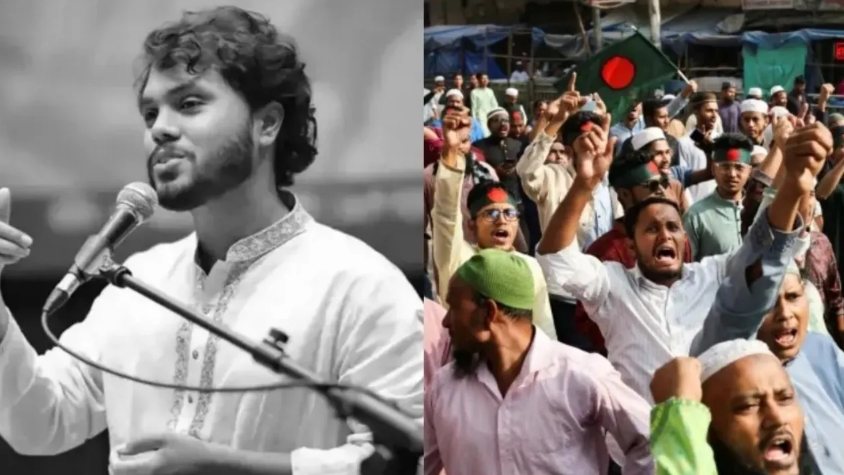
The situation in Bangladesh has become increasingly volatile following the killing of radical ideologue and anti-India voice Sharif Osman Hadi, triggering widespread violence across the country. The incident occurred in Dhaka, where a masked assailant opened fire on Hadi in broad daylight. He was critically injured and later shifted to Singapore for treatment, where he succumbed to his injuries. Police have identified Faisal Karim as the prime suspect in the murder.
Investigators revealed that hours before the attack, Faisal Karim allegedly told his girlfriend that an incident would occur that would “shake the entire country.” Soon after Hadi’s death, protests erupted nationwide, rapidly turning violent. Demonstrators targeted media organisations, cultural centres and historical structures, while the residence of Bangladesh’s founding father Sheikh Mujibur Rahman was also set on fire, further escalating tensions.
Law and order across the country has deteriorated sharply, casting a shadow over Bangladesh’s political stability ahead of the general elections scheduled for February 2026. Reports indicate that minorities, particularly Hindus, have been targeted during the unrest. In one incident that drew international condemnation, a Hindu man was brutally beaten and burned to death following allegations of religious provocation.
The interim government led by Muhammad Yunus is facing growing criticism for its inability to control the violence and restore peace. Analysts warn that continued unrest could have serious implications for Bangladesh’s internal security and democratic process in the months leading up to the elections.