





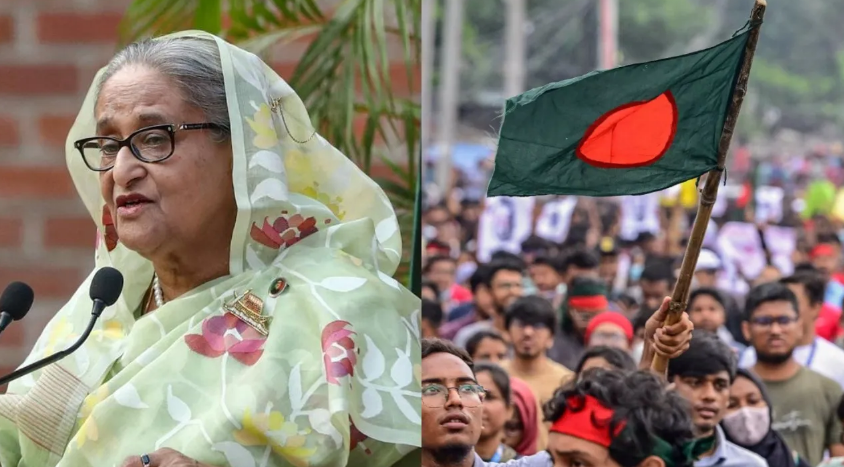
Dhaka/New Delhi: The student-led uprising in Bangladesh in August last year resulted in the collapse of the Sheikh Hasina government, ending the Awami League’s 15-year rule. Sheikh Hasina fled the country and is currently staying in India. Since then, Bangladesh has witnessed sweeping political, judicial, and diplomatic changes under an interim government led by Nobel laureate Dr Muhammad Yunus.
Yunus-Led Interim Government
Following Hasina’s departure, an interim administration headed by Dr Yunus assumed charge. Several officials appointed during the previous regime were removed. Amid sustained student protests, Bangladesh’s Chief Justice and five other judges resigned. The government also initiated action against police personnel accused of firing on protesters.
As part of institutional reforms, the interim government decided to overhaul the police force’s identity. The police logo was changed in April this year, while a new uniform was introduced in November.
Foreign Policy Realignment
A significant shift has been observed in Bangladesh’s foreign policy. For the first time since the 1971 Liberation War, Dhaka has moved closer to Pakistan. Direct shipping links between Karachi and Chittagong were restored after decades. Bangladesh has participated in Pakistan-hosted naval exercises such as Aman-25 and has shown interest in procuring defence equipment from Pakistan.
Relations with Pakistan had remained strained during Sheikh Hasina’s tenure. However, ties improved after the Yunus government took office, with Pakistani leaders even issuing public statements warning of retaliation in the event of Indian military action against Bangladesh.
Bangladesh is also pursuing advanced drone technology from Turkey, with the interim government holding discussions with Turkish parliamentary delegations. At the same time, Dhaka is strengthening engagement with China, prioritising Chinese investment and infrastructure projects over Indian-backed initiatives. Efforts are also underway to secure political and economic support from the United States and the European Union.
Death Sentence for Sheikh Hasina
After Hasina fled the country, Bangladesh’s International Crimes Tribunal (ICT) held her guilty of crimes against humanity linked to the student movement and sentenced her to death. The interim government has repeatedly requested India to extradite her, but New Delhi has so far indicated no willingness to hand her over.
Killing of Osman Hadi
Political tensions escalated following the killing of young leader Osman Hadi, who played a key role in the movement that led to Hasina’s ouster. On December 12, Hadi was shot by unidentified assailants while returning home in Dhaka’s Purana Paltan area. He was later taken to Singapore for advanced treatment but died on December 18.
Hadi was reportedly preparing to contest the upcoming elections as an independent candidate. His death triggered protests and unrest. His brother accused the interim government of involvement in the killing and demanded a high-level probe, warning of serious political consequences if justice is denied.
Hindu Youth Killing Sparks Outrage
In a separate incident, the killing of a 27-year-old Hindu youth, Deepu Chandra Das, sparked widespread outrage. He was allegedly attacked by locals over remarks perceived as critical of Islam. The mob reportedly beat him to death and later set his body on fire. Videos of the incident circulated widely on social media, drawing national and international condemnation.
Awami League Banned
The Yunus-led interim government has formally banned the Awami League, preventing it from contesting the general elections scheduled for February next year. The government has officially confirmed that the party will not be allowed to participate in the polls, marking a decisive shift in Bangladesh’s political landscape.
As Bangladesh moves towards elections under interim rule, the country remains politically volatile, with deep concerns over governance, minority safety, and regional geopolitics.