





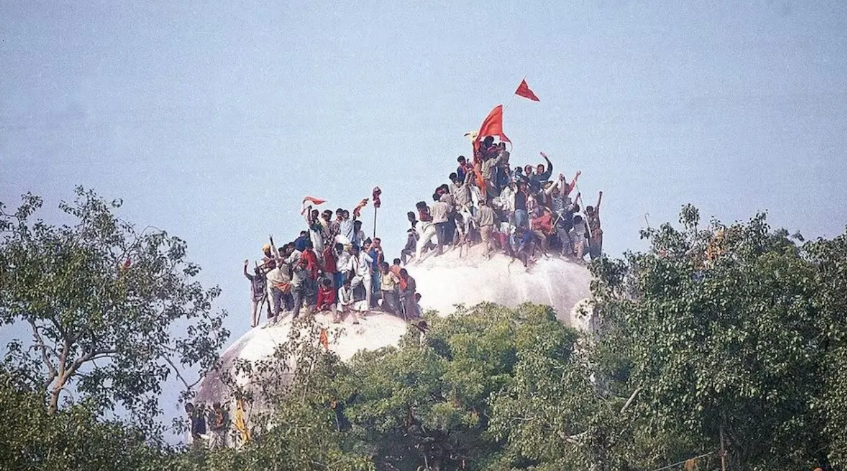
New Delhi: The demolition of the Babri Masjid on December 6, 1992, remains one of the most defining and polarising moments in independent India’s history, reshaping the nation’s political landscape, communal relations and internal security for decades. The Supreme Court’s landmark judgment in 2019 concluded a 27-year legal battle and eventually paved the way for the construction of the Ram Temple, which was consecrated on January 22, 2024.
The demolition, carried out by lakhs of kar sevaks gathered in Ayodhya despite heavy security presence, triggered immediate nationwide communal riots, left hundreds dead and caused lasting fractures between communities. The incident also generated intense political upheaval across states and at the Centre.
From Ayodhya to Mumbai: A Wave of Riots and Terror
Violence swept through the country following the demolition, with Mumbai bearing the heaviest toll between December 1992 and January 1993. More than 900 people were killed and over 2,000 injured in the riots, according to the Justice B.S. Srikrishna Commission.
The security repercussions continued in the years ahead. The 1993 serial bomb blasts in Mumbai — masterminded by Pakistan-backed gangster Dawood Ibrahim — killed 257 people and marked a turning point in transnational terrorism targeting India. Subsequent terror attacks, including the 2001 Parliament attack, the 2006 Mumbai train bombings, the 2008 26/11 siege and the 2019 Pulwama attack, were linked to Pakistan-based extremist groups.
Liberhan Commission: 17-Year Probe, No Convictions
The Liberhan Commission, constituted on December 16, 1992, to investigate the demolition, became one of the longest-running inquiries in India. Although it was expected to submit its findings within three months, it took 17 years, examined more than 400 witnesses and cost over ₹8 crore. The final report, submitted in June 2009, identified several political leaders but resulted in no convictions.
Legal Journey: From Allahabad High Court to Supreme Court Verdict
The Allahabad High Court in 2010 ordered a three-way division of the disputed land among Hindus, Muslims and the Nirmohi Akhara. The case subsequently reached the Supreme Court, which on November 9, 2019, unanimously ruled that the land legally belongs to Hindus. The Court directed that a separate 5-acre plot be allotted to Muslims for the construction of a mosque. The verdict observed that while there was no conclusive evidence of a temple being demolished to build the mosque, the Muslim side could not establish legal ownership of the disputed land.
January 22, 2024: A Historic Milestone
More than three decades after the demolition and centuries after the dispute originated, the Ram Temple was inaugurated on January 22, 2024. During the consecration ceremony held at 12:30 p.m., the idol of the child form of Lord Ram was installed in the sanctum sanctorum. The event was attended by Prime Minister Narendra Modi and thousands of dignitaries, with millions watching across India and abroad.
Broader Geopolitical Impact
The demolition had immediate repercussions in Pakistan, where nearly 100 Hindu temples were attacked in retaliation. India-Pakistan relations entered a prolonged phase of mistrust and instability. Although attempts were made to normalize relations — including the opening of the Kartarpur Corridor in 2019 — Pakistan-based terror outfits continued to target India’s religious and civilian establishments. The Ram Temple itself was targeted in a terror attack in July 2005, when six Lashkar-e-Taiba militants stormed the complex before being neutralized.
Thirty-three years after December 6, 1992, the Babri Masjid demolition continues to shape India’s political narrative, societal dynamics and internal security framework. While the construction and consecration of the Ram Temple have provided legal closure to one of the nation’s most contentious disputes, analysts note that the long-term legacy of the demolition continues to influence India’s communal harmony and geopolitical challenges.