





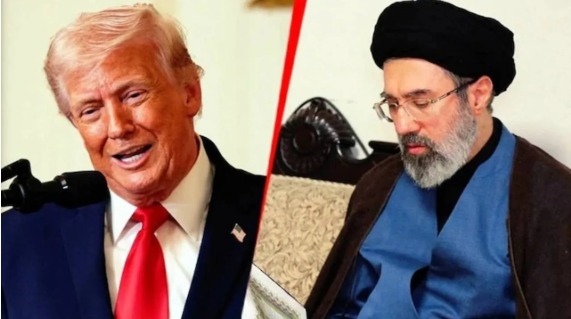
The terrifying war that raged between the United States and Iran for 107 days has finally come to an end with a peace agreement. Though the flames of war have been extinguished, Iran has been left completely devastated by the massive aerial bombardment carried out by America. Rebuilding and recovering from this destruction is estimated to cost at least 300 billion dollars (approximately ₹25.05 lakh crore). US President Donald Trump has announced that a historic agreement has been reached between the two nations.
The Scale of Iran’s Destruction
Iran’s government spokesperson Fatemeh Mohajerani detailed just how severely the country has been affected. Oil and gas refineries — the backbone of Iran’s economy — were completely destroyed in American bombing raids. Major bridges, seaports, railway networks, electricity plants, and drinking water facilities across the country have been wiped out entirely. Along with these, thousands of residential homes, hospitals, schools, and universities have been razed to the ground. According to Iran’s own estimates, the total asset loss since the war began stands at approximately ₹22.5 lakh crore. Over 17,000 critical installations across Iran were damaged in the American strikes. Experts believe it will take at least 10 to 15 years for Iran to return to its pre-war condition and rebuild its infrastructure. As for America, the Pentagon has stated that the war cost the United States approximately 29 billion dollars (around ₹2.4 lakh crore).
Will America Pay for Iran’s Reconstruction?
Trump flatly dismissed as fake news any suggestion that America is giving its own money to Iran. The US Congress would never approve the use of American taxpayer money for Iran’s reconstruction. Instead, the funds are being drawn from an international investment fund, into which wealthy Gulf nations such as Saudi Arabia and the UAE, along with other countries around the world, contribute investments and financial assistance. These funds will only be released to Iran on the condition that it fully surrenders its nuclear weapons and complies with international regulations. America’s role is only that of a guarantor to this agreement.
Why the Money May Not Be Enough
In reality, this reconstruction money will not be sufficient for Iran to fully recover from the destruction, and experts believe far more will be needed in the years ahead. As time passes, costs will only rise. With reconstruction expected to take 10 to 15 years, inflation will drive up the prices of cement, steel, labour, and civilian technology dramatically, pushing costs well beyond current budget estimates. Beyond the visible destruction — buildings and bridges — the bombing raids have completely destroyed underground infrastructure as well, including water pipelines, gas lines, and communication cables. Identifying and repairing these hidden networks will cost far more than initially anticipated. Iran’s primary source of revenue has always been oil exports, and those refineries have been reduced to ash. This means Iran is currently in a position where it cannot earn even a single rupee on its own. To provide employment to its citizens and keep the machinery of government running, Iran will need additional grants well beyond the ₹25 lakh crore reconstruction figure.