



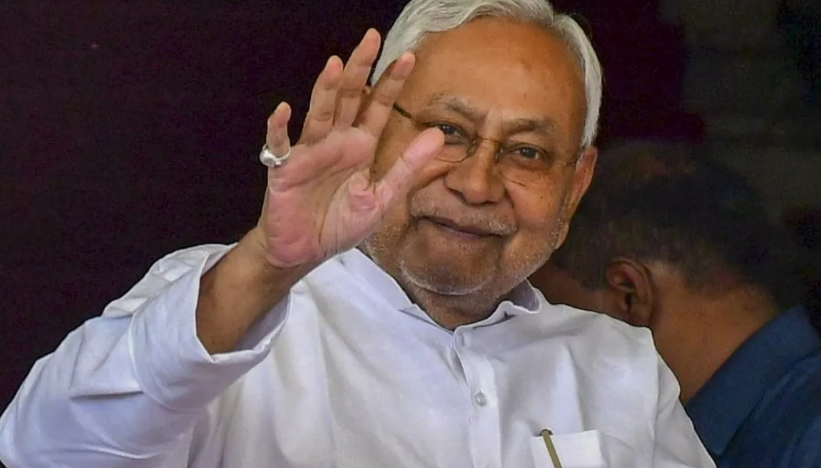
Political tensions are escalating in Bihar as uncertainty grips the ruling alliance following recent developments involving Chief Minister Nitish Kumar. After securing a decisive victory in the November elections and returning to power, Nitish Kumar’s unexpected move toward the Rajya Sabha has sparked speculation about his possible resignation, triggering intense debate over his successor.
The uncertainty deepened during Nitish Kumar’s ongoing “Samriddhi Yatra,” particularly after his remarks in Jamui district. Addressing Deputy Chief Minister Samrat Choudhary, he indicated that the responsibility of Bihar would be overseen by him in the future and expressed confidence in his leadership. His earlier public display of camaraderie with Choudhary in Saharsa has further fueled speculation that he may be the leading contender for the मुख्यमंत्री post.
However, these developments have led to growing unease within Nitish Kumar’s own party, Janata Dal (United). Several senior leaders are reportedly unhappy with the projection of Samrat Choudhary as a potential successor. Party leader and minister Vijay Kumar Chaudhary stated that Nitish Kumar has not officially named any political heir, attempting to downplay the speculation.
At the same time, there are increasing concerns within the party that transferring leadership to a leader from the Bharatiya Janata Party could trigger internal dissent. Leaders have cautioned that such a move may not be accepted smoothly by all sections of the JD(U), raising the possibility of political friction within the alliance.
If Nitish Kumar decides to step down, it is widely expected that the next Chief Minister will come from the BJP. Apart from Samrat Choudhary, the names of Dilip Jaiswal and Nityanand Rai are also being discussed. Given Bihar’s complex caste dynamics, the BJP leadership is likely to consider an OBC candidate, even as it faces the challenge of managing internal differences and ensuring a smooth leadership transition.