





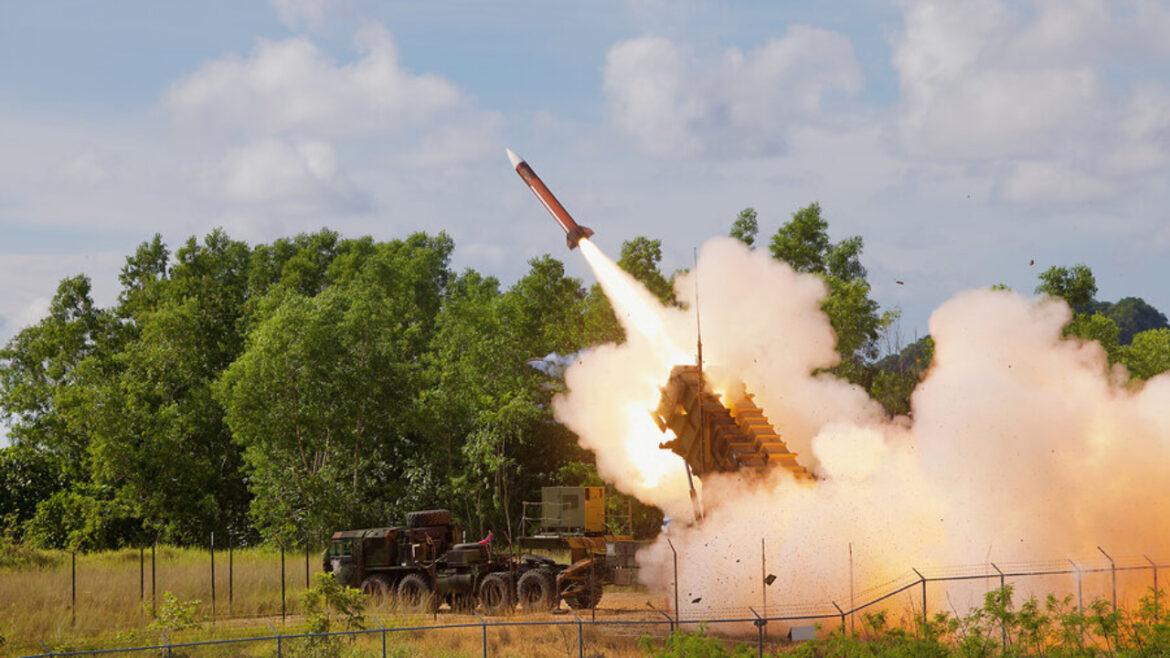
The United States possesses the world’s most powerful military, with advanced weapons systems, thousands of aircraft, and military bases spread across the globe. Yet a new concern is now troubling Washington — not a shortage of soldiers or fighter jets, but a shortage of missile interceptors. During the conflict with Iran, the U.S. used its key air defense systems, Patriot and THAAD, extensively, significantly depleting stockpiles of these critical weapons. How serious is this shortage for the U.S.? What would happen if a war broke out with China? And how might these developments affect India? Here’s a closer look.
In warfare, striking an adversary is one challenge — defending against an adversary’s attack is another altogether. As Iran launched attacks using ballistic and cruise missiles along with drones, the U.S. relied heavily on its Patriot and THAAD air defense interceptors to protect its military bases and personnel. This is where the real problem began: Iran’s attacks, carried out using relatively inexpensive drones and missiles, forced the U.S. to expend far costlier interceptors in response. As the war dragged on, America’s stockpiles of these crucial defense missiles steadily declined.
Patriot and THAAD are both vital components of U.S. air defense. The Patriot interceptor is designed to intercept ballistic missiles, cruise missiles, and aircraft before they reach their targets, while THAAD serves as another protective shield against ballistic missiles at higher altitudes. According to the Center for Strategic and International Studies (CSIS), heavy use of these systems during the conflict with Iran has reduced U.S. Patriot interceptor stockpiles by 65 percent compared to pre-war levels, leaving the country with fewer than 1,000 Patriot interceptors. THAAD interceptor numbers have also fallen sharply, to around 250. This has left the U.S. facing the dual challenge of maintaining its air defense capabilities while urgently replenishing the interceptors already expended. CSIS notes, however, that this does not mean U.S. weapons stocks are exhausted altogether — the military retains sufficient capacity to continue operations against Iran. The real issue is not simply whether weapons exist, but how many remain and how quickly they can be replaced, since firing an interceptor takes mere seconds, while manufacturing and stockpiling a replacement can take months or even years.
Compounding the concern is the possibility of confrontation with China, particularly over Taiwan in the Western Pacific. Such a conflict would demand air defense capabilities on a much larger scale — not only to intercept missile attacks but also to protect military bases, naval and air force assets, and allied nations. With Patriot and THAAD stockpiles already reduced, any future large-scale conflict could place significant strain on U.S. military readiness and strategic capacity.
In response, the U.S. is moving to accelerate weapons production. It has signed a massive $58.6 billion contract with defense and aerospace giant Lockheed Martin to manufacture Patriot PAC-3 MSE interceptors. The deal, running from 2026 to 2032, aims to triple Patriot missile production capacity by 2030. However, ramping up production is far from simple, requiring raw materials, electronic components, engines, guidance systems, and considerable time. CSIS estimates that fully restoring depleted missile stockpiles could take several years, meaning weapons expended during the war cannot be replaced immediately. This shortfall could also affect U.S. allies, since America supplies various weapons systems not just for itself but to partners including Ukraine, Israel, and Gulf nations — leaving Washington to balance replenishing its own stocks against meeting allied demands, with the risk of delayed deliveries if domestic needs are prioritized.
As for India, experts say there is no immediate threat from the depletion of U.S. missile stockpiles. However, if tensions between the U.S. and China escalate, there could be strategic implications for India in the Indo-Pacific region. Additionally, rising demand for systems like Patriot and THAAD could lead to supply delays and price increases. Ultimately, the Iran-U.S. conflict has underscored a broader lesson for the world: military strength is not just about possessing weapons, but about how quickly they can be replenished. Despite commanding the world’s most powerful military, the U.S. now faces a new challenge in the form of depleting interceptor stockpiles — and how quickly it can restore them remains to be seen in the days ahead.