





- Ravi Prakash

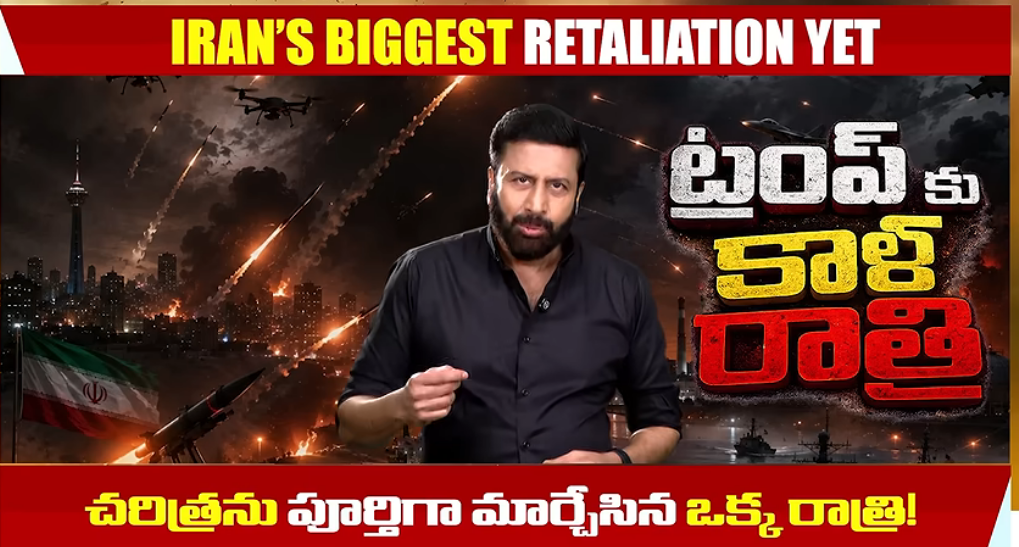
Some nights fade into history, while others change it permanently. This was one such night — one that pushed the Middle East to the brink of danger unlike any before it, in the span of just a few hours. Missiles, drones, flames, blasts, military threats, strategic oil routes, power plants, water supply systems, and warships all became part of a single, chaotic timeline. Before governments could even confirm what was actually happening, thousands of videos had already gone viral across social media, leaving millions of people worldwide unable to distinguish fact from fiction. Modern warfare, it is now clear, is fought not just with missiles but with information, viral videos, anonymous social media accounts, and mutual accusations between rival sides. This account attempts to separate verified fact from unconfirmed claim regarding what unfolded in the Middle East that night, and to explain how a single night altered the region’s political landscape — not to determine who “won,” but to establish what actually happened.
For months, the region had been simmering under the shadow of conflict. Military bases across the Gulf remained on high alert, with the United States tightening its troop presence throughout the region. Israel was already engaged in multiple conflicts simultaneously, while Iran had repeatedly warned that it would not tolerate any direct attack on its territory. Analysts had long feared that a full-scale war would not remain confined to a single country — and on this night, that fear began to play out.
As darkness fell, social media erupted. Footage purportedly showing missiles launching from Iran went viral, coinciding with warning sirens sounding in the Saudi city of Yanbu. Reports emerged that Iran had struck U.S. base camps, sparking global alarm. While the scale of damage to American forces remained unclear, it was evident that Iran had begun a campaign of retaliation. What initially appeared to be a limited missile exchange escalated within minutes into a multi-front conflict, engulfing the wider region in what many described as a firestorm.
Amid this, another video began circulating showing what appeared to be an attack on a U.S. consulate, intensifying public fear. However, no verified evidence has confirmed the authenticity of this footage or whether it depicted an actual attack at that location — underscoring a defining feature of modern conflict, in which unverified claims spread faster than confirmed facts. Questions soon arose over the fate of critical energy infrastructure, as another video surfaced showing fires lighting up the night sky near Yanbu, one of Saudi Arabia’s largest energy hubs and a key route for global oil transport independent of the Strait of Hormuz. While the cause of the fire remains unconfirmed, analysts note that any strike on energy infrastructure in this location would have global economic repercussions, affecting oil prices, international shipping, and financial markets. Compounding the uncertainty, unverified claims suggested Iran was not acting alone, raising the specter of additional actors operating behind the scenes.
Escalation Across the Region
Tensions spread rapidly and without regard for borders or existing alliances. Reports proliferated online suggesting Iran was coordinating attacks on U.S. and Israeli positions alongside Yemen’s Houthi movement and Lebanon’s Hezbollah — claims that remain unverified, though experts have long noted Iran’s extensive regional network of allied groups. Around the same time, footage showing large fires in Tel Aviv circulated widely, with online users claiming Iranian missiles had struck fuel facilities there. While the fires are visible in the footage, no evidence has confirmed their cause. Separately, a widely shared video claimed to show Iranian forces striking Israeli nuclear facilities, with some online posts framing it as a major setback for Israel — a claim that likewise remains unverified. Nonetheless, the speed at which such claims spread illustrates a broader pattern: unverified information now travels faster than official confirmation.
As hours passed, reports emerged of Iranian missile and drone strikes on U.S. bases in Kuwait, the UAE, and Jordan — again unverified, but significant given the decades-long strategic importance of these American installations in the Gulf. Attention then turned to the Strait of Hormuz, through which roughly one-fifth of the world’s oil supply passes. Videos showed cargo vessels ablaze near the strait, with Iran claiming two oil tankers struck sea mines and exploded — an account the United States has disputed. The incident revived questions about the reliability of competing claims, even as the strategic stakes of any disruption to this corridor remain undisputed: even minor incidents in this waterway carry the potential to destabilize global markets.
Infrastructure and Civilian Impact
The conflict’s reach extended to civilian infrastructure as well. In Kuwait, fires broke out at a power plant and desalination facility — a nation that relies on such plants for approximately 90 percent of its clean water supply. Responsibility for the incident remains unclear, but the implications are significant: attacks on such infrastructure represent a shift of conflict from battlefields into the daily lives of ordinary citizens, threatening basic access to water and electricity.
In Iraq, video footage showed large fires and explosions, accompanied by online claims of an attack on a U.S. military base — claims that remain unconfirmed, though Iraq has historically served as a flashpoint in U.S.-Iran tensions. Separately, footage circulating online purported to show Iranian forces attacking a U.S. military aircraft within the Strait of Hormuz, a claim also lacking independent verification. Given the strait’s status as one of the world’s most sensitive maritime corridors, any confirmed incident there would carry significant risk of broader escalation.
Rhetoric Intensifies
Adding to the volatility, an advisor to Iran’s Supreme Leader issued a pointed warning, stating that “the time for talks is over” and that a full-scale attack would follow if military actions did not cease. The remarks, regardless of their ultimate weight, reflected a broader breakdown in diplomatic channels between Washington and Tehran, with rhetoric increasingly matching missiles as a tool of confrontation — developments that have unsettled global financial markets as much as regional security.
Aftermath and Unanswered Questions
By morning, explosions and missile strikes had subsided, and relief efforts were underway to contain fires across affected sites. Yet clarity remained elusive. Government statements conflicted with one another, military officials issued denials even as investigations proceeded, and journalists and analysts faced the challenge of separating confirmed fact from rapidly spreading claims. Within hours, reports had touched nearly every part of the region — from Iran to Israel, Saudi Arabia, Kuwait, Iraq, Jordan, the UAE, Oman, and reportedly as far as the Indian Ocean — with oil routes, power infrastructure, water systems, military bases, and international shipping lanes all drawn into the narrative. The scale of concern alone has begun to affect global economic sentiment, prompting heightened government alert and early signs of market instability.
Analysts caution that the true measure of the night’s events lies not merely in the number of missiles fired, but in the resulting fear, instability, and disruption to civilian life — uncertainty over electricity, schooling, and business continuity now weighs on the region’s population. Historically, many major conflicts did not begin with formal declarations but escalated gradually from smaller tensions until control was lost. Whether this night marks the beginning of a larger conflict, or whether diplomatic efforts will yet pull the region back from the brink, remains to be determined.
As one observer noted, missiles can destroy cities, but misinformation can alter the historical record itself. Even if hostilities pause and diplomatic talks resume, the effort to establish a verified account of events is likely to continue well beyond the immediate conflict.