





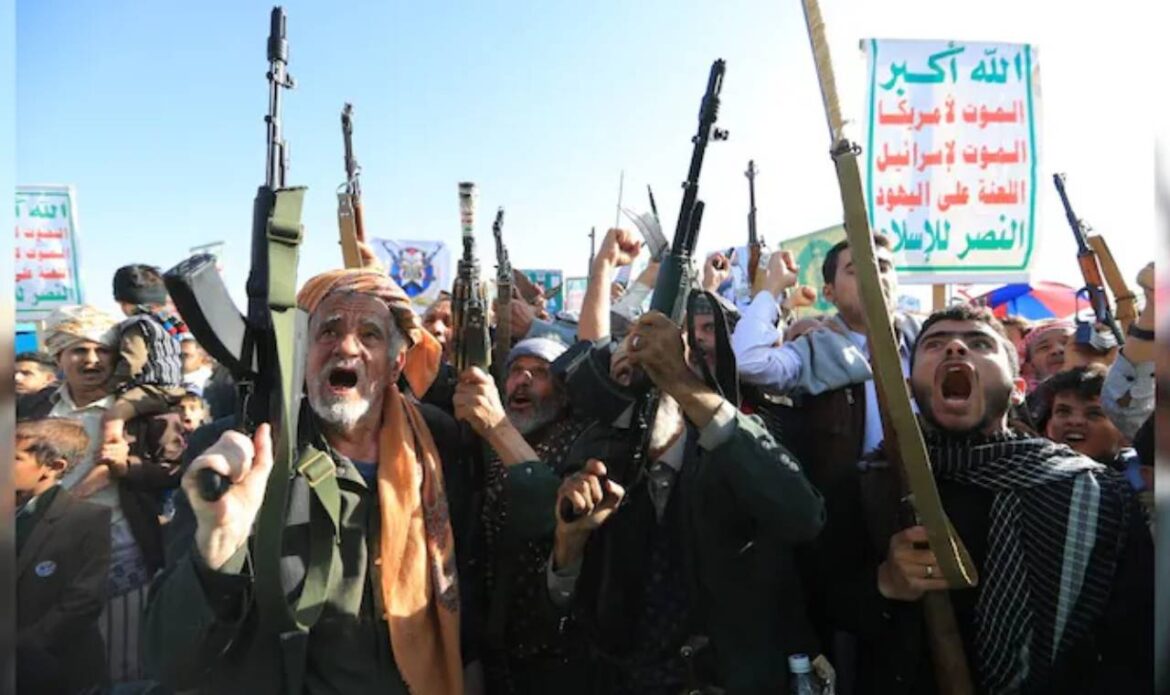
Riyadh: Saudi Arabia is among the most heavily armed nations in the world. It spends hundreds of billions of rupees a year on its military and has bought advanced fighter jets and missiles from the United States, Britain and France. It ranks eighth globally in military spending. Yet it has been unable to fully stop attacks by the Iran-backed Houthi rebels of Yemen. Repeated drone and missile strikes are exposing gaps in its air defences.
Saudi Arabia has also signed recent defence agreements with Türkiye and Pakistan. Because its capacity to manufacture weapons domestically is limited, it relies heavily on imports, which also help it strengthen ties with supplier countries.
Why the Houthis are hard to stop
The Houthis control a large part of Yemen and have steadily built up their arsenal since seizing the capital, Sanaa, in 2014. With thousands of fighters, drones and missiles, they now pose a serious challenge to Riyadh. They have shown they can send drones and missiles as far as Israel, roughly 2,000 km from Yemen. In Saudi Arabia, they are targeting airports, oil facilities and other critical sites.
The group is believed to possess medium-range missiles such as the Palestine-2 and Tufan, along with short-range Burkan and Badr missiles. Rather than relying on a single weapon type, the Houthis launch drones and missiles that travel at different speeds in the same attack, making them harder for air defence systems to detect and intercept.
A vast territory to defend
Analysts say Saudi Arabia’s geography is a central problem. The country covers about 2.2 million square kilometres, making it extremely difficult to protect every region at once. Its defences intercept some missiles and drones, but given the country’s size, stopping every attack every time is not possible. Even with Patriot and THAAD systems and fighter aircraft, experts say a shield that prevents any strike across the entire country cannot be built.
The capital Riyadh, airports, oil facilities, military bases, the holy cities and other key sites all require constant protection.
Mounting pressure on air defences
Repeated attacks are straining Saudi defences. Experts say stocks of the interceptors used to shoot down missiles and drones in flight could run low, and some reports point to a global shortage of such munitions. While Saudi forces are stopping many attacks, some missiles are getting through. Strikes aimed at oil facilities and Riyadh airport are of particular concern.
Roots of the conflict
The tensions stem from Yemen’s ongoing civil war. Saudi Arabia backs Yemen’s internationally recognised government, while the Houthis, supported by Iran, hold parts of the country.
Saudi Arabia stepped up military action after the Houthis recently seized key areas along the Red Sea coast. Saudi warplanes struck Sanaa airport, which is under Houthi control. Analysts say the Houthis view their attacks on Saudi territory as a way to make Riyadh face the same conditions they are experiencing.
Strategy: pressure over perfection
Analysts say the Houthis do not need to get through Saudi defences every time. An occasional successful strike is enough to demonstrate their capability, and repeated attacks on critical sites keep up the pressure on Riyadh.
Saudi Arabia has been trying for years to extricate itself from the Yemen war, but the attacks are complicating peace efforts. Analyst Juno said the Houthis are signalling that the price Saudi Arabia must pay for peace will keep rising if they continue to hit key sites.
Riyadh airport and Vision 2030
King Khalid International Airport in Riyadh is one of the world’s largest. It spans roughly 225 square kilometres and lies about 35 km from the city centre. The airport is vital to Saudi Arabia’s plans under Crown Prince Mohammed bin Salman’s Vision 2030 programme, which aims to make Riyadh a hub for tourists, international companies and world-class events. Attacks on the airport therefore raise both economic and security concerns.
Experts say the strikes may not immediately weaken Saudi military strength, but repeated attacks could fuel public fear and affect businesses and investment.
Saturday’s attack was reportedly one of the deadliest in Saudi Arabia in more than a decade. Twelve people were reportedly killed and more than 300 injured. It came shortly before a global energy summit due to be held in Riyadh. Concern has been heightened by the fact that authorities, who previously sent phone alerts warning residents of incoming attacks, have recently stopped doing so.
The situation shows that advanced weapons and a massive defence budget do not guarantee protection against every attack. Saudi Arabia’s size, the Houthis’ drone and missile campaign and the shortage of defensive munitions together pose a growing challenge, one that threatens not only the country’s security but also its economic ambitions.