





Escalating tensions between the United States and Iran have pushed West Asia into a fresh phase of uncertainty, even as crucial peace negotiations continue between the two countries. The situation has intensified with reports of drone interceptions, military threats, and growing disputes over Iran’s nuclear programme. Diplomatic efforts aimed at reducing hostilities are now being overshadowed by aggressive rhetoric and military posturing from both sides.
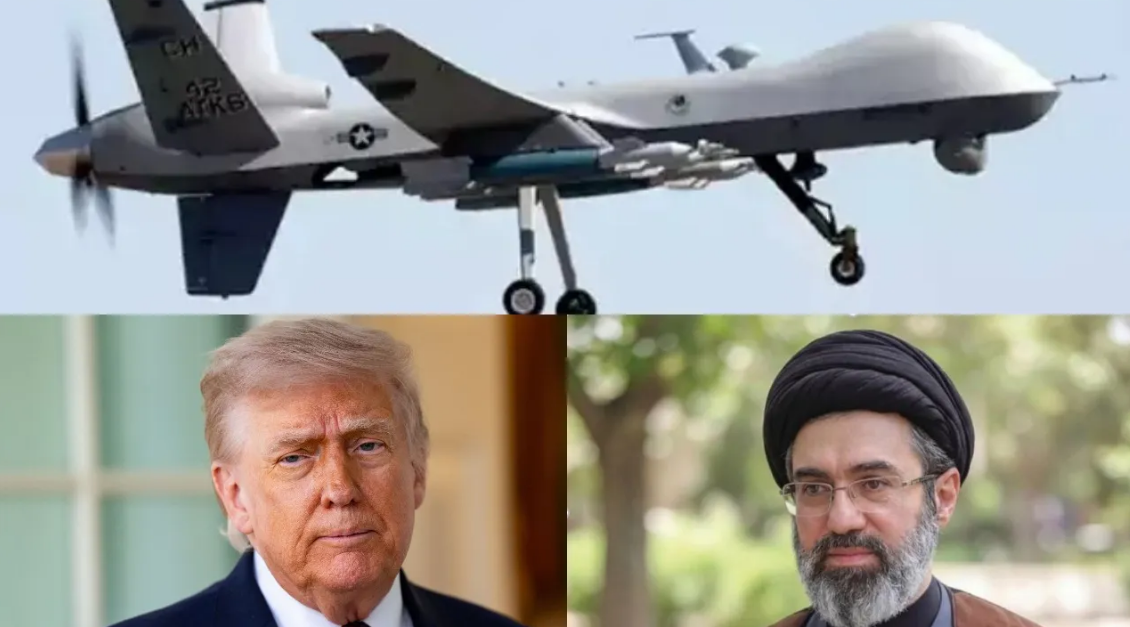
Iran’s Islamic Revolutionary Guard Corps (IRGC) claimed that it successfully shot down an advanced American MQ-9 Reaper drone after it allegedly entered Iranian airspace. Tehran also stated that its forces targeted a US RQ-4 surveillance drone and F-35 fighter jets during the confrontation. Iranian officials described the operations as retaliatory measures in response to previous American strikes carried out in and around the Iranian capital, Tehran.
Iranian leader Mojtaba Khamenei issued a strong warning to the United States, stating that any renewed military action during ongoing peace talks would trigger severe consequences. He warned that American military bases across West Asia would no longer remain secure if Washington resumed attacks. Khamenei further stated that Iran would continue defending its sovereignty despite mounting regional pressure and escalating military threats.
According to international media reports, the United States has suffered significant drone losses during the recent confrontation, with nearly 30 drones reportedly destroyed or damaged. Several drones were allegedly shot down mid-air, while others were destroyed in missile strikes on the ground. Reports suggest that the Pentagon has lost close to 20 percent of its drone inventory in the conflict. US officials, however, maintained that American forces were conducting defensive operations targeting Iranian missile launch facilities and boats suspected of laying sea mines.
Meanwhile, the dispute over Iran’s enriched uranium stockpile has emerged as the central issue in the ongoing negotiations. Former US President Donald Trump demanded that Iran either hand over its enriched uranium to the United States or destroy it under international supervision, warning that the material could be used to develop nuclear weapons. Iranian President Masoud Pezeshkian denied allegations that Tehran was pursuing nuclear weapons but signalled that Iran was unwilling to fully surrender its uranium reserves, describing them as vital to the country’s sovereignty and strategic interests.