





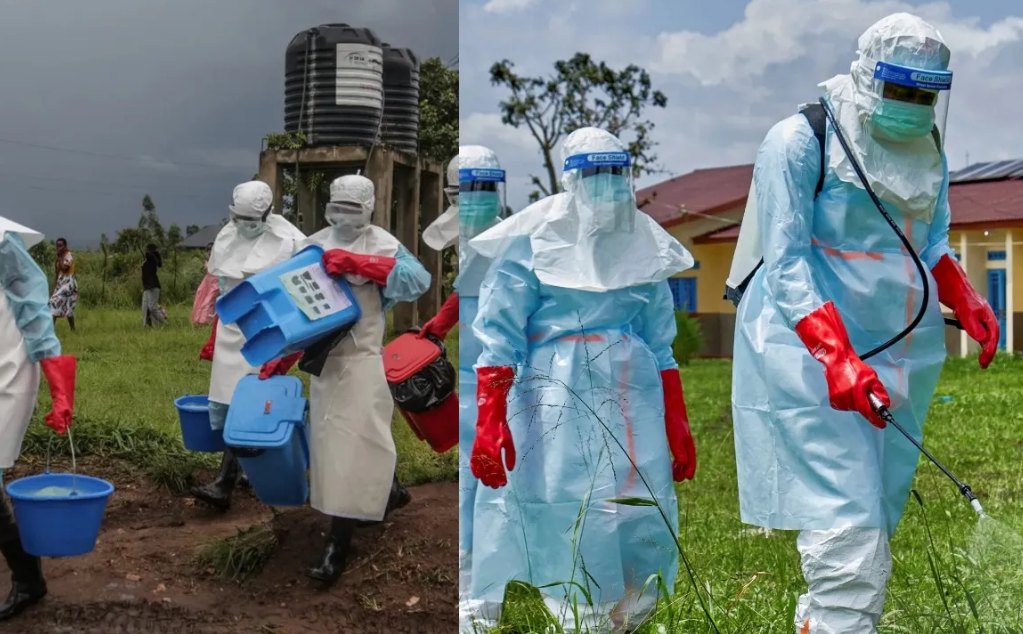
The deadly Ebola virus, which once terrorized the world, is once again spreading rapidly in the Democratic Republic of Congo (DRC), raising global concern. The virus, which claimed thousands of lives during the 2014-2016 West African outbreak, is now resurfacing with increasing intensity in Congo. Health officials say the disease initially presents with symptoms such as fever and body pain before turning severe and potentially fatal. The rising number of infections has created panic among local residents.
According to the World Health Organization (WHO), more than 900 suspected cases have been reported in the country so far, while 101 cases have been officially confirmed as Ebola infections. The Ituri region has emerged as the worst-affected area in the latest outbreak. Home to nearly five million people, the region is already facing severe humanitarian challenges due to ongoing internal violence and displacement. Reports indicate that one in every five residents has fled their homes, while nearly one-fourth of the population is in urgent need of humanitarian assistance.
The worsening security situation in the conflict-hit region has made it extremely difficult for healthcare workers and aid agencies to operate effectively. Several medical staff and humanitarian workers are reportedly leaving the area due to safety concerns. This has significantly hampered efforts to identify infected patients and conduct contact tracing, allowing the virus to spread more rapidly. Health authorities warn that delays in treatment and containment measures are further aggravating the crisis.
In view of the escalating situation, the WHO has declared the Ebola outbreak a Public Health Emergency of International Concern (PHEIC). The agency has called for urgent international support to strengthen healthcare infrastructure, improve surveillance systems, and ensure the safety of frontline medical personnel working in affected regions.
Ebola is a highly dangerous zoonotic virus that spreads from wild animals, particularly bats and monkeys, to humans and can further transmit through direct contact with the bodily fluids of infected individuals. The previous Ebola epidemic in West Africa between 2014 and 2016 infected more than 28,000 people and claimed over 11,000 lives. With the virus once again posing a major public health threat, countries across the world are closely monitoring the developments and stepping up preparedness measures.