





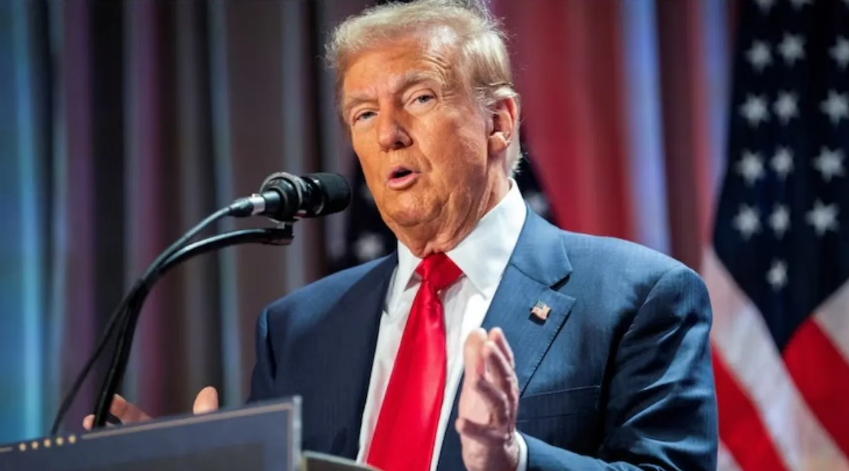
Iran’s Islamic Revolutionary Guard Corps has stirred international concern by declaring that properties belonging to US President Donald Trump across Gulf nations now constitute legitimate targets for its military strikes. According to reports in Iranian state media, the properties identified include Trump-branded hotels, towers, and golf clubs located in Dubai, Saudi Arabia, Qatar, and Oman, marking a significant escalation in rhetoric amid the ongoing standoff between Tehran and Washington.
Among the properties named by Iranian media are the Trump International Hotel & Residential Tower and the Trump International Golf Club in Dubai; the Trump Plaza Tower in Jeddah, the Trump Tower in Riyadh, and the Trump International Golf Club in Wadi Safar, all in Saudi Arabia; the Trump International Golf Club & Villas Simaisma in Qatar; and the Trump International Hotel in Muscat, Oman. While no details have been provided on the timing or method of any potential strikes on these properties, the announcement carries particular weight given the sharply deteriorating relationship between the two nations.
Iranian military spokesperson Ebrahim Zolfaghari warned that any American strikes on civilian infrastructure inside Iran would trigger far more severe retaliation across the wider region. The warning came in direct response to remarks by Trump, who had threatened to target Iran’s power plants and bridges. Iran replied that it would respond with even more destructive measures, and further stated that any American interference in the strategically critical Strait of Hormuz would constitute the crossing of a clearly defined “red line.”
While the United States maintains that its military operations are intended solely to degrade Iran’s military capabilities, Iran’s Khatam al-Anbiya Central Headquarters has cautioned that any strike on its infrastructure would prompt retaliation against infrastructure across the entire West Asia region, not just within Iran itself. This broadened threat signals Tehran’s intent to internationalize the conflict beyond its borders should the U.S. proceed with strikes on non-military targets.
Taken together, these developments mark a significant escalation in the confrontation between Washington and Tehran, extending the potential battlefield to include commercial and civilian assets tied to Trump personally, alongside critical infrastructure across the region. Analysts note that such rhetoric, regardless of whether it translates into action, is likely to further heighten security concerns among Gulf nations and add pressure on international efforts to prevent the conflict from spreading further.