





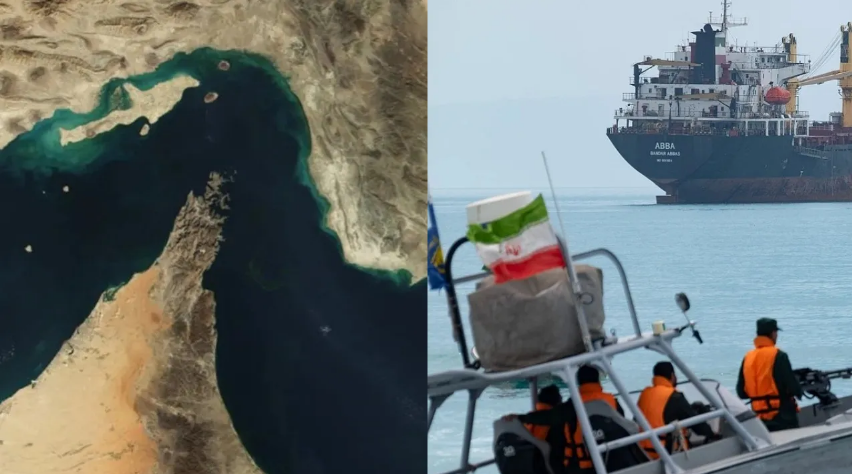
Following a two-week temporary ceasefire in the Middle East, global powers expecting a boost in international trade have been dealt a new shock by Iran. Tehran has refused to relinquish control over the strategic Strait of Hormuz. Senior Iranian officials told Russian news agency TASS that even under the ceasefire, only 15 vessels per day would be allowed to pass through the crucial waterway. They emphasized that unrestricted shipping, as seen before the conflict, is no longer possible.
Iran has mandated that all ships must obtain prior permission before navigating the strait. Furthermore, the movement of vessels will be monitored exclusively by the Iranian armed forces, specifically the Islamic Revolutionary Guard Corps (IRGC). Ships transiting Hormuz will have to follow strict IRGC-imposed rules and pay tolls, while any discussions regarding vessel traffic will be conducted directly between the IRGC and the respective countries. Officials made it clear that no ship can pass without explicit Iranian approval.
Iran has linked these restrictions to its economic interests. The country is demanding the release of its assets that were frozen in various nations due to the war, tying the permission for shipping through Hormuz to the release of these holdings. By connecting maritime transit to financial concessions, Iran is asserting both strategic and economic leverage over global trade routes.
While the temporary ceasefire has reduced direct hostilities, concerns over oil transportation and international trade remain. The strict control over the Strait of Hormuz ensures that, despite the ceasefire, global shipping and commerce continue to face uncertainty and potential disruption.