





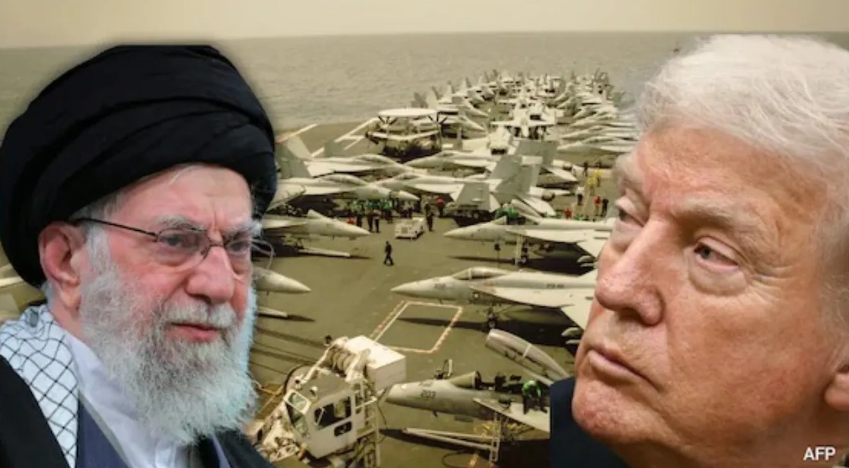
Rising tensions between the United States and Iran have sparked concerns that Washington could move from indirect involvement in regional conflicts to direct military engagement. Analysts say Iran’s Supreme Leader Ayatollah Ali Khamenei has shown no indication of backing down amid mounting pressure from U.S. President Donald Trump, fueling speculation of a potential confrontation. The escalating rhetoric and military posturing have drawn global attention, with experts warning of serious geopolitical consequences if the situation deteriorates further.
Defense assessments highlight a significant gap in conventional military strength between the two nations. The United States maintains advanced stealth aircraft, nuclear-powered aircraft carriers, and precision-guided missile systems, making it the world’s most formidable military power. Iran, by comparison, operates an aging air force and has limited naval capabilities, making it unlikely to withstand a direct, large-scale assault from U.S. forces in a conventional war scenario.
However, security experts caution that military superiority alone does not determine the outcome of conflicts. Iran is widely believed to rely on asymmetric warfare tactics to counterbalance U.S. dominance. Tehran has influence over proxy groups across the Middle East, including Hezbollah in Lebanon, the Houthis in Yemen, and paramilitary factions in Iraq, which could target U.S. interests in the region. Analysts also point to Iran’s ability to disrupt shipping through the Strait of Hormuz — a vital route for nearly one-fifth of the world’s oil supply — as well as its cyber capabilities and potential for prolonged guerrilla-style resistance within its mountainous terrain.
Geopolitical observers note that history has shown prolonged conflicts can impose heavy economic and political costs even on militarily superior nations, citing past U.S. engagements in Vietnam and Afghanistan. Experts suggest Iran could pursue a strategy aimed at increasing the financial and human toll of any conflict, potentially influencing public opinion in the United States and pushing Washington toward negotiations. While the U.S. could significantly damage Iran’s military infrastructure, analysts argue that achieving lasting political objectives may prove far more complex, raising the stakes of any direct confrontation.