





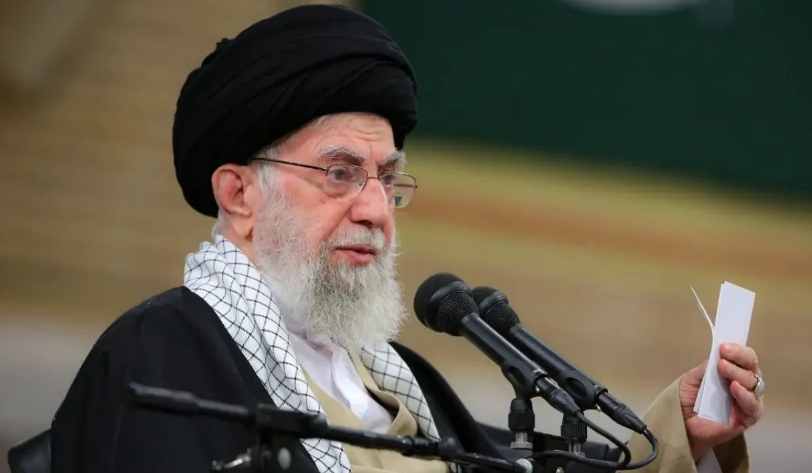
Tensions in West Asia continue to escalate as the United States recently deployed warships near Iranian waters, raising fears of possible military confrontation. In an unprecedented move, Iran’s Supreme Leader Ayatollah Ali Khamenei did not attend the traditional February 8 meeting with Air Force commanders, a gathering he has observed annually since assuming leadership in 1989. Even during the COVID-19 pandemic, Khamenei participated, making his absence this year a notable departure from long-standing tradition, according to Iran International.
The meeting was instead attended by the Chief of Staff of Iran’s Armed Forces, Abdulrahim Mousavi. Analysts suggest that Khamenei’s absence could be a strategic decision given the heightened U.S.-Iran tensions and the potential threat of American military strikes in the region. His decision not to appear publicly has sparked speculation about his approach to national security during a period of significant geopolitical risk.
Observers are divided over the reasons behind Khamenei’s absence. Some believe it is a precautionary measure to avoid exposure amid possible attacks, while others argue it reflects his focus on directing military and security strategy behind the scenes. Meanwhile, Iran has repeatedly warned that any U.S. military action could trigger widespread instability across the Middle East.
The ongoing standoff underscores the fragile security situation in the region. Both the U.S. and Iran remain on high alert, and international attention is sharply focused on developments between the two nations, as the possibility of escalation continues to pose serious risks for regional and global stability.