





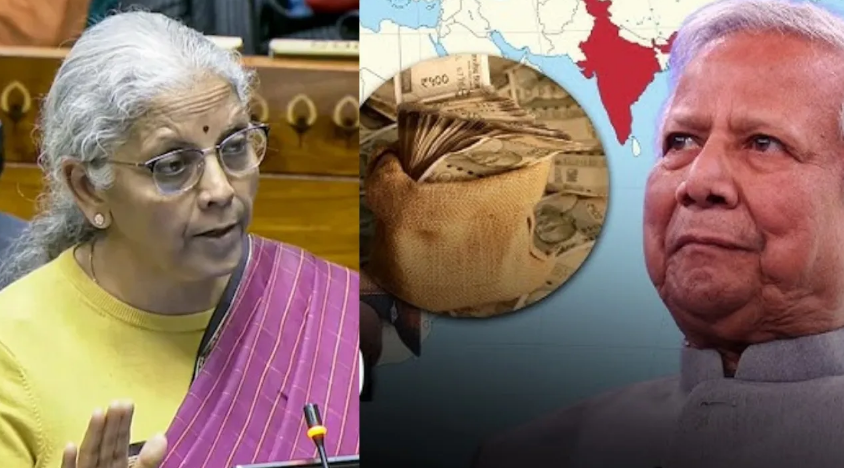
New Delhi: India’s Union Budget 2026 has sent a strong diplomatic message globally, reinforcing support for friendly nations while scaling back assistance to countries adopting adversarial positions. As part of its “Neighbourhood First” policy, the Centre sharply reduced funding to Bangladesh by 50 percent—from ₹1.2 billion last year to ₹600 million—citing poor utilisation of previous allocations and Dhaka’s recent anti-India posture, including concerns over attacks on Hindu minorities.
Bhutan emerged as the largest beneficiary, receiving ₹2,288.55 crore for hydropower and infrastructure projects. Nepal’s allocation was raised to ₹8 billion from ₹7 billion last year, while Mauritius received ₹550 crore, up from ₹500 crore. Seychelles retained its grant at ₹19 crore.
Strategically located Mongolia saw a fivefold increase in Indian assistance, rising from ₹5 crore to ₹25 crore. Sri Lanka’s funding was enhanced from ₹3 billion to ₹4 billion to aid economic recovery. Afghanistan’s allocation was increased to ₹150 crore from ₹100 crore, earmarked for reconstruction and humanitarian support.
In contrast, India reduced development assistance to Myanmar from ₹3.5 billion to ₹3 billion amid concerns over military rule, while aid to the Maldives was marginally trimmed from ₹6 billion to ₹5.5 billion.
Overall, Budget 2026–27 underscores India’s approach of strengthening partnerships with trusted neighbours while delivering a clear signal to unfriendly regimes. In a notable development, no allocation was made this year for Iran’s strategic Chabahar Port project, reportedly due to US sanctions and shifting geopolitical considerations.