





-Ravi Prakash
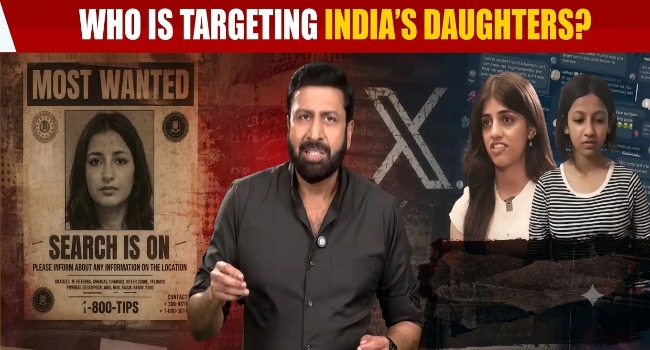
Imagine a 15-year-old girl receiving repeated calls from unknown numbers, with callers threatening to rape her, kill her, and dump her body in a drain. Now think about why she was targeted. Her only “crime” was participating in a protest against the government. Following that protest, she found herself put up for public auction on social media, with vile posts and comments — some assigning her a “rate” of Rs 200 or Rs 300 — dragging her dignity through the mud in full public view. In a related case, a young boy was taken to a police station and questioned for hours amid an atmosphere of intimidation, while social media had already pronounced its verdict, branding him a criminal even before any due process had taken place.
This is not the story of one girl, nor merely a story about a protest — it is the story of what happened after the protest ended. Since videos from the recent Jantar Mantar demonstration went viral, many young men and women who took part in it have faced severe humiliation on social media. A particular section of users targeted them, exposed their personal information, issued death threats, and posted content designed to demean their character. Several victims have also alleged facing harassment from the police. This investigation does not seek to justify any abusive language used by the students, nor does it aim to support any political party — its purpose is simply to establish what happened to the young people who have become the centre of a nationwide debate.
The first case examined is that of Ruchika Singh, a 15-year-old girl whose video abusing the Prime Minister went viral nationwide, prompting a swiftly registered FIR. Ruchika later apologised and admitted her comments were wrong, but her troubles did not end there. In an interview, she said she continued to receive calls from unknown persons threatening rape and murder, and alleged that police harassment persisted even after the Prime Minister publicly urged that the children involved be forgiven. These remain her allegations and are presented as such. The story, however, does not end with Ruchika — it takes a significant turn with the case of another young woman who, unlike Ruchika, never abused the Prime Minister or behaved indecently, yet now says she is afraid even to step out of her home.
That woman is Shraddha Singh, a 23-year-old yoga instructor and content creator from Madhya Pradesh who travelled to Delhi to join the Jantar Mantar protest, believing, like thousands of other young Indians, that she had the right to make her voice heard. During the protest, near Connaught Place, she recorded a seven-second Instagram reel with two Rapid Action Force personnel and posted it before returning to her day. She could not have anticipated that this brief clip would upend her life. According to a report published by Scroll, several social media pages shared the reel with captions accusing Shraddha of insulting the security forces, though she maintains she said nothing indecent in the video. The clip went viral and eventually made its way to television studios.
What followed was deeply distressing. Using the number plate of her car visible in her Instagram posts, some individuals identified and leaked her phone number and home address, triggering an immediate wave of threats. In an interview with the BBC, Shraddha said she was being threatened with rape and murder, and alleged that the social media accounts of her mother and friends were also targeted. She further revealed that even her routine videos began attracting indecent comments, with users demeaning her by assigning her a monetary “rate” of Rs 200 or Rs 300. Amid this, she posed a pointed question — asking, in Hindi, whether the Prime Minister does not see all this happening, and whether he will take no action.
Shraddha is far from the only victim. According to the Scroll report, the photographs, social media accounts, personal details, and family information of numerous young women who participated in the protests were circulated online. Ruchika Singh was among them: an AI-generated “Most Wanted” poster bearing her photograph went viral, alongside her home address, phone number, and details of her family members. Regardless of whether one agrees or disagrees with these young women, a critical question remains — when political disagreement turns into personal vendetta, where should the line be drawn? Criticism is a legitimate part of democracy, but intimidation, online harassment, and threats are not.
A review of interviews, social media posts, and media reports reveals a consistent and troubling pattern: young protesters were not merely criticised but had their personal details deliberately collected and used to target them. The AI-generated “most wanted” poster of Ruchika Singh, along with her family details and workplace address, was circulated with clear intent, illustrating how criticism escalated into personal vendetta. Comments on these posts ranged from demands for immediate arrest to sexually harassing remarks and open threats that these young women needed to be “taught a lesson” — language that, irrespective of political alignment, is difficult to justify.
Amid this, another video surfaced showing a boy inside a police station, with social media posts claiming he had been summoned for questioning. Under Section 179 of the Bharatiya Nagarik Suraksha Sanhita (BNSS), children under the age of 15 are not to be called to a police station for interrogation. Beyond the legal question, this raises a larger concern about how the system ought to treat children caught up in political controversies. AISA leader Neha Bora, who undertook a 23-day hunger strike during the students’ movement, responded strongly to this development, though her comments remain her own opinion. The core concern here, however, extends beyond politics to the safety of individuals: one young woman is unable to leave her home out of fear; another has received rape threats; a third continues to deal with police scrutiny; and a child has had to enter a police station. Whether the underlying allegations hold up is a matter for the law to determine, but the atmosphere of fear enveloping these young lives is undeniable.
A situation in which citizens who question authority live in fear does not serve democracy well. Disagreement with these young people’s views, criticism of their language, and legal action in the event of law-breaking are all legitimate responses. But there must be a limit — and when criticism turns into intimidation, disagreement into the exposure of personal information, and political contestation into rape threats, society must pause and ask whether it has crossed a line. This is no longer a matter confined to a single slogan or a single protest; it reflects a broader and uncomfortable truth about how quickly the lives of ordinary young people can be upended once something goes viral online.
Setting aside party lines — the BJP, the Congress, and ideological considerations altogether — the central question is what kind of democracy is desired: one in which young people participate enthusiastically, or one in which they are afraid even to ask questions. This investigation documented that pain directly: a young woman alleging rape threats; another too frightened to leave her house; a 15-year-old in tears over unrelenting online harassment; and a child’s presence at a police station raising questions about institutional conduct. Though these are separate individuals with separate stories, they share a common concern — whether the freedom to speak openly in society has been replaced by fear. The Indian Youth Congress has raised a similar allegation, contending that despite public assurances, police harassment of protesting youth has not abated. These remain political claims, and officials may offer a different account, but the fear experienced by these young people cannot be dismissed.
One principle, however, should transcend politics: no woman should face rape threats for expressing a political opinion; no family’s personal information should be exposed publicly; and no child should be made to live in fear for raising questions. No democracy should condone such conduct. Those who disagree with the stance taken by these young protesters are free to challenge them directly, engage them in debate, question them, and pursue legal action where the law has been broken — but threats, the leaking of personal information, and public humiliation have no place in a democratic society.
Prime Minister Narendra Modi recently referred to the protesters as “children” and appealed for them to be forgiven — a gesture that must be reflected not only in words but in concrete action. Young people facing threats need protection, harassment must cease immediately, and any investigation must proceed strictly within the bounds of the law, free of intimidation or humiliation; only then will the Prime Minister’s appeal carry genuine weight. This appeal extends beyond the government to every political party and every leader: improving the tenor of public discourse requires that when supporters abuse women or issue rape threats, leaders must not remain silent but must publicly condemn such conduct as wrong, since meaningful change must begin from within.
This account was not compiled in support of Ruchika, Shraddha, or any political party, but to pose one clear question — can a young woman who raises her voice in protest go on to live without fear? The answer to that question will shape not only these young women’s futures but also the health of the country’s democracy, since the true measure of a nation lies not in how it treats its leaders, but in how it treats its youth.