





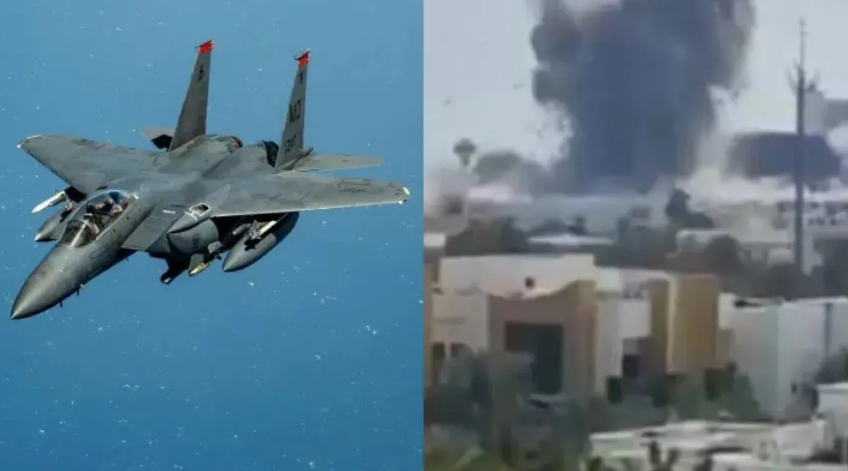
Hopes of progress toward a peace arrangement in West Asia have suffered a major setback after fresh military exchanges between the United States and Iran near the strategically critical Strait of Hormuz significantly heightened regional tensions. The overnight confrontation, involving missiles and drones, has renewed concerns about the possibility of a wider conflict in a region that plays a crucial role in global energy supplies.
According to reports, the escalation followed Iran’s alleged downing of a U.S. MQ-1 surveillance drone operating over international waters. Citing repeated Iranian actions, the U.S. Central Command (CENTCOM) reportedly launched retaliatory strikes targeting military facilities in Guruk and on Qeshm Island. The United States described the operation as a defensive action and stated that its forces had successfully destroyed elements of Iran’s air defense system, a ground control station and two one-way attack drones. Washington also said no American personnel were injured during the operation and reiterated its commitment to protecting U.S. interests in the region.
Iran’s Islamic Revolutionary Guard Corps (IRGC) responded by accusing the United States of targeting telecommunications infrastructure on Sirik Island. The IRGC subsequently announced retaliatory action against the airbase allegedly used to launch the American strikes. Although Iranian authorities did not officially identify the facility, reports indicated that missiles may have been fired toward a U.S. military base in Kuwait. The reports gained further attention after Kuwait’s air defense systems were reportedly activated in response to a potential aerial threat hours before the alleged attack.
The latest confrontation has placed Qeshm Island at the center of regional attention. Located near the Strait of Hormuz, the island hosts one of Iran’s largest underground missile complexes, commonly referred to as a “missile city.” The facility is believed to house anti-ship cruise missiles, including the Ghadr-380 and HY-2 Silkworm systems, capable of targeting vessels passing through the strategic waterway. Iran has also reportedly deployed ballistic missile systems such as the Khayyam-1, Kheibar Shekan, Ghadr and Emad missiles, which can strike targets at ranges of up to 800 kilometers.
Military analysts note that these missile systems, along with Iran’s fleet of fast-attack boats, represent a significant challenge to U.S. naval operations in the Gulf region. As a result, they are considered key targets in any potential military engagement involving the two countries.
The developments have triggered concern across global markets and diplomatic circles. The Strait of Hormuz is one of the world’s most important maritime chokepoints, carrying nearly 20 percent of global oil supplies. Any disruption to shipping through the waterway could have far-reaching consequences for international energy markets and global trade.
With tensions continuing to rise, analysts have warned that the absence of restraint from either side could increase the risk of a broader regional conflict. The latest military exchanges have once again underscored the fragile security situation in West Asia and the potential impact of any escalation on global economic and geopolitical stability.