





-Ravi Prakash
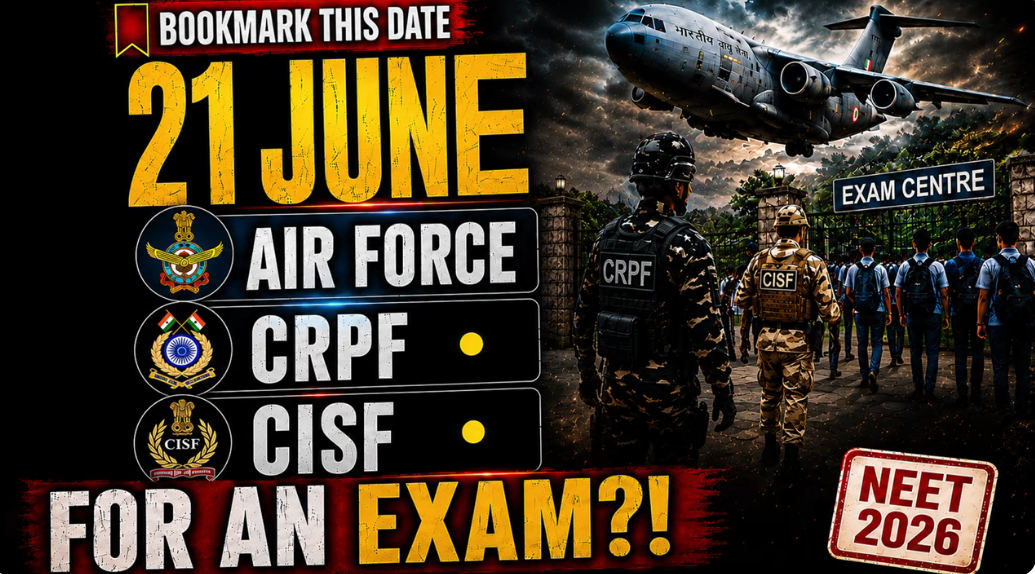
Imagine arriving at an examination center on the morning of an important entrance test. Before entering, candidates undergo biometric verification and facial recognition scans. High-definition CCTV cameras monitor every corner of the premises. Question papers are transported under armed escort, with security personnel guarding every stage of the process. Authorities track the movement of confidential examination material in real time, while multiple government agencies remain on alert.
These measures may resemble a military operation or a high-security national mission. In reality, they are part of the arrangements for the National Eligibility cum Entrance Test (NEET), one of India’s most important entrance examinations. The extraordinary security deployment has sparked a larger debate: why has the country reached a stage where such measures are necessary merely to conduct an academic examination?
For millions of students, NEET is far more than a test. It represents a life-changing opportunity and often determines whether a candidate can fulfill the dream of becoming a doctor. Families invest years of effort, financial resources, and emotional energy into preparation. Students spend countless hours studying, many relocating to other cities for coaching and beginning preparations years in advance.
In such a high-stakes environment, trust in the examination process becomes as important as the examination itself. Students are prepared to face difficult questions, intense competition, and even disappointing results. What they find difficult to accept is the perception that the system itself may be unfair. Once confidence in the process is shaken, the value of merit and hard work comes under question.
That concern intensified after allegations of irregularities and question paper leaks triggered nationwide controversy. Questions emerged about the integrity of the examination process, transforming what began as an exam-related issue into a larger crisis of credibility.
Government officials have repeatedly emphasized that extensive safeguards are in place. According to authorities, the entire process—from question paper preparation, translation, printing, packaging, transportation, and distribution—is conducted under strict supervision. Senior officials oversee operations, while state governments, district administrations, and law enforcement agencies work together to ensure security at every stage.
Despite these assurances, any breach in the system has far-reaching consequences. A paper leak does not merely affect a single examination; it directly impacts the future of thousands of students and erodes public trust in the system. Once candidates begin to suspect that the process is unfair, every result, rank, and selection becomes vulnerable to scrutiny.
As a result, the NEET controversy evolved into a broader debate about whether large-scale examinations can be conducted securely in India. Questions emerged about whether students can continue to trust the system and whether institutions can regain credibility once public confidence has been damaged.
The government’s response was unprecedented. Determined to restore trust, authorities announced that the NEET re-examination would be conducted under some of the most stringent security arrangements ever implemented for an academic test in India.
Question papers are being transported through heavily guarded convoys. Multiple security checkpoints have been established. Biometric verification has been made mandatory, while facial recognition systems and AI-based surveillance technologies have been deployed at examination centers. The scale of these arrangements reflects the seriousness with which authorities are treating the issue.
However, the situation has also raised another critical question: should an examination require such extraordinary security measures in the first place?
Observers argue that these arrangements are typically associated with the protection of highly sensitive national assets rather than routine academic assessments. While enhanced security may be necessary in the current circumstances, the need for such measures also highlights deeper concerns about vulnerabilities within the examination system.
Experts note that trust cannot be restored solely through surveillance cameras, biometric scanners, or armed guards. Security can help prevent misconduct, but credibility ultimately depends on public confidence in the fairness and integrity of the process.
The most significant concern, however, remains the impact on students.
Candidates who spent months or years preparing for the examination suddenly found themselves facing uncertainty after reports of paper leaks emerged. Investigations were launched, legal proceedings followed, and questions arose about results and possible re-examinations. For many students and their families, the emotional and psychological toll has been immense.
Students invest not only time but also their hopes, aspirations, and future plans into examinations such as NEET. Many come from middle-class backgrounds and make considerable sacrifices in pursuit of a medical seat. Yet they often bear the consequences of systemic failures despite having done nothing wrong.
Mental health experts have also expressed concern about the growing pressure on students. Competitive examinations in India are already among the most demanding in the world. The addition of paper leak allegations, uncertainty about results, fears of cancellation, media scrutiny, and social media speculation has significantly increased stress levels among candidates.
Over the years, incidents involving students struggling to cope with academic pressure have highlighted the need for a more supportive and trustworthy examination environment. Education experts argue that the primary purpose of an examination system should not only be to identify and punish cheating but also to ensure fairness and confidence for honest students.
This debate also stands in contrast to the objectives outlined in the National Education Policy, which emphasizes reducing examination stress and creating a more student-friendly learning environment. While these goals have been widely welcomed, critics point out that the current situation presents a very different reality.
Today, students enter examination centers under the watch of armed personnel, surveillance systems, and multiple layers of security. While authorities have a responsibility to ensure examinations are conducted fairly, many question whether the current environment reflects the broader goal of reducing stress on students.
The controversy has also drawn attention to the organized networks allegedly involved in examination malpractice. Investigators believe that paper leaks are often not isolated incidents but the result of sophisticated operations that exploit weaknesses in the system. Given the enormous value attached to high-stakes examinations, such activities can generate significant financial incentives for criminal groups.
As a result, examination security is increasingly being treated not merely as an educational issue but also as a matter of law enforcement and public administration. Every major leak damages not only a particular examination but also the reputation of the broader system.
Some analysts argue that excessive centralization may contribute to such vulnerabilities. They point to international examples such as China’s Gaokao examination, which is taken annually by millions of students. Discussions surrounding Gaokao typically focus on curriculum, preparation, and academic competition. In contrast, conversations about NEET have increasingly centered on security arrangements, investigations, arrests, biometric verification, and surveillance measures.
The fundamental challenge, experts say, is not simply ensuring the safe transportation of question papers but creating a system in which students can enter examination halls confident that the process is fair and secure.
Trust is not rebuilt overnight. It requires consistent performance, transparency, and accountability over time. While the extensive security arrangements may help prevent future breaches, they also serve as a reminder of how much confidence has been lost.
Examinations remain one of the most important pillars shaping the future of India’s youth. They influence educational opportunities, career prospects, and social mobility. When trust in these examinations is weakened, faith in merit itself comes under threat.
The consequences extend far beyond rankings, scores, and cutoffs. They affect students’ mental well-being, self-confidence, and belief that hard work will be rewarded fairly. For many aspiring medical students, years of preparation revolve around a single opportunity. When that opportunity is compromised, the impact can be profound.
As India prepares for the NEET re-examination on June 21, the event represents more than a test for students. It is also a test of the credibility of the country’s examination system.
The central question remains whether authorities can successfully restore the trust of millions of students and their families. If they can, the re-examination may mark the beginning of meaningful reform. If not, concerns about the integrity of the system are likely to persist long after the examination itself concludes.