





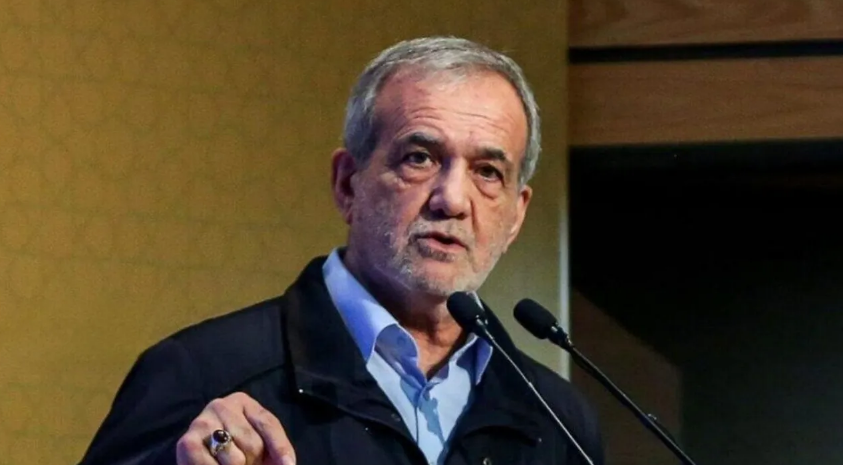
Reports suggesting that Iranian President Masoud Pezeshkian has submitted his resignation have triggered significant political speculation both within Iran and internationally. According to reports carried by international media outlets, Pezeshkian is believed to have decided to step down due to growing dissatisfaction over the increasing influence and interference of the Islamic Revolutionary Guard Corps (IRGC) in the country’s governance and decision-making processes.
A report published by a U.S.-based Iranian newspaper claimed that the president had already submitted a resignation letter to Iran’s Supreme Leader, Mojtaba Khamenei. According to the report, Pezeshkian raised serious concerns about the functioning of Iran’s administration, warning that authority was gradually shifting into the hands of IRGC commanders. He reportedly alleged that since the escalation of regional tensions, elected representatives and government officials had increasingly been excluded from strategic and policy-related decisions.
The report further stated that the president expressed frustration over being unable to effectively perform even the basic constitutional and administrative responsibilities associated with his office. However, international sources indicated that no final decision has yet been taken on the reported resignation and that the matter remains pending before the Supreme Leader.
Iranian authorities have strongly rejected the reports. Mehdi Tabatabaei, Deputy Head of Communications in the President’s Office, dismissed the claims as false and politically motivated. He accused sections of the international media of attempting to undermine the Iranian government’s credibility through misinformation campaigns at a time when sensitive negotiations with the United States are underway. Turkish state-affiliated media also carried reports highlighting Iran’s denial of the resignation claims.
The controversy comes as diplomatic discussions between Iran and the United States over a potential peace agreement continue. According to media reports, U.S. President Donald Trump has sought significant changes to the proposed framework. The draft agreement reportedly includes provisions for a 60-day temporary ceasefire and the reopening of the strategically important Strait of Hormuz for international maritime traffic.
However, U.S. media reports indicate that Washington remains firm on its demand that Iran permanently abandon any capability to develop nuclear weapons. Trump has recently stated that the United States would not rush into an agreement and would carefully assess all terms before reaching a final decision.
Responding to the reported U.S. demands, Iranian Parliament Speaker Mohammad Bagher Ghalibaf said Tehran would not accept any agreement that failed to safeguard the country’s sovereignty, national rights and strategic interests. He stressed that Iran would reject any deal perceived as compromising its independence or core national objectives.
With reports of a possible presidential resignation emerging alongside difficult negotiations with the United States, Iran is facing a period of heightened political uncertainty. The developments have intensified scrutiny of the country’s internal power dynamics and its ongoing diplomatic efforts on the international stage.