





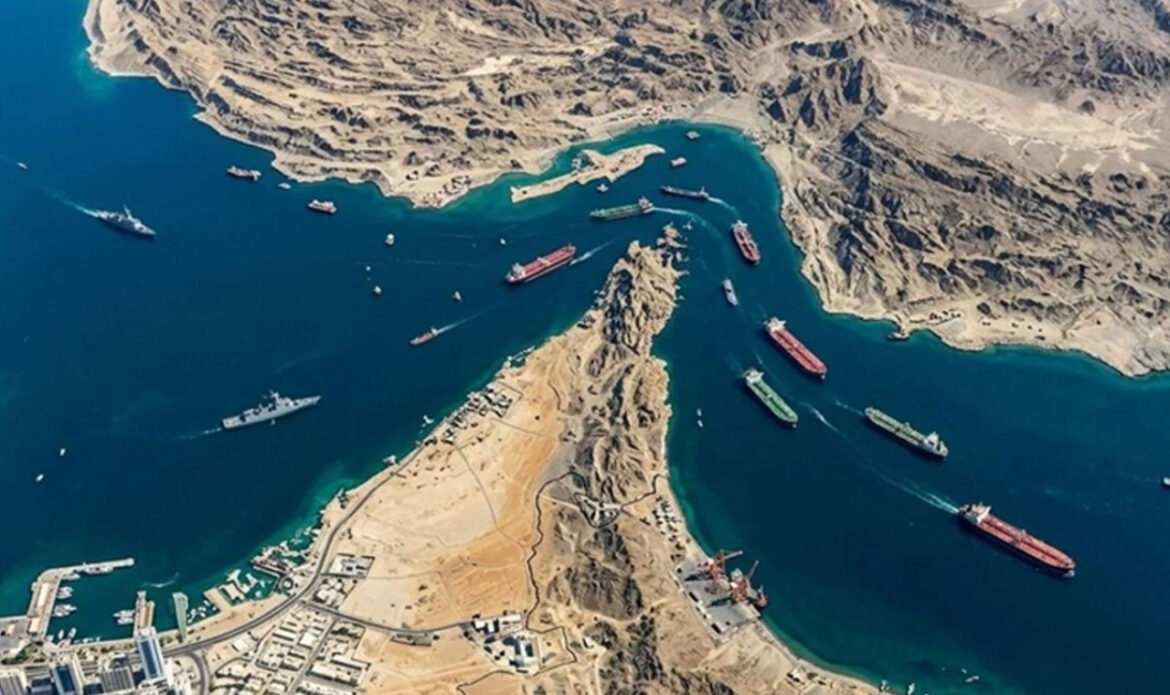
The Iranian government has introduced new regulations on the Strait of Hormuz, one of the world’s most critical sea routes for the transportation of oil and gas. Following a recent agreement between the United States and Iran, the Strait of Hormuz was promptly reopened. However, Iran has now imposed strict restrictions on all international vessels transiting through this route. Iran has made it clear that no ship will be permitted to enter its maritime boundaries without prior authorization and valid insurance.
To oversee and strictly enforce these new regulations, the Iranian government has also established a new official body called the Persian Gulf Strait Authority The creation of this dedicated authority is part of the international agreement reached between Washington and Tehran. The new rules came into immediate effect as soon as the Islamabad understanding agreement was signed between the two countries. Iran has also launched an official website for this purpose, and every commercial vessel wishing to enter the waterway is required to register its complete details on that website in advance.
Iran has stated that no ship owner or operator, regardless of nationality, will be allowed to enter the strait at their own discretion. Vessels must submit a transit request to Iran’s new authority at least **48 hours** before entering the boundaries of the Strait of Hormuz. A stern warning has been issued that vessels lacking proper authorization documents and valid insurance will be stopped at the border. As a result, international shipping companies will need to plan their voyages well in advance.
Iran has noted that due to the military conflicts that took place in this maritime region over the past three months, there is a risk of underwater landmines or other lethal hazards on the seabed. For this reason, Iran has laid down a condition that vessels must travel exclusively through designated safe corridors to prevent accidents. Iran has further warned that if any vessel disregards these prescribed routes and proceeds via an alternative path, the ship’s ownership bears full responsibility for any accidents or losses that occur as a result.