





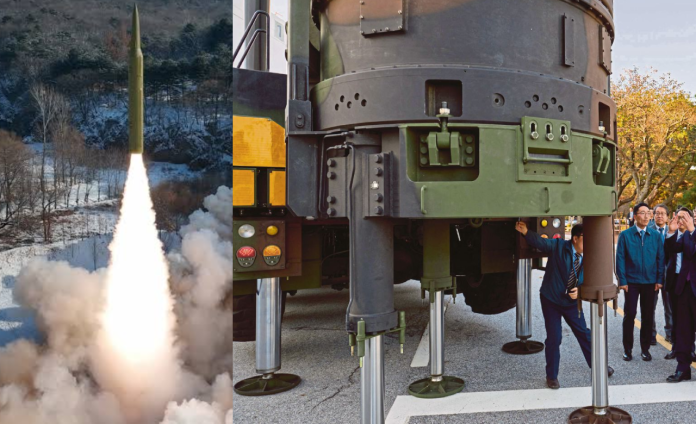
Tensions on the Korean Peninsula have again reached a peak following a landmine explosion on September 21 along the Demilitarized Zone (DMZ) border, which injured three South Korean soldiers. The incident has since developed into a race to build advanced hypersonic weapons.
North Korea has announced the launch of a new hypersonic missile that flies at low altitude and uses artificial intelligence to evade enemy radar. South Korea responded by successfully testing a “Hypersonic Glide Vehicle” developed with indigenous technology.
Such weapons travel at more than five times the speed of sound and can readily penetrate conventional defence systems. Seoul has stepped up its vigilance with military cooperation from the United States and Japan, while Pyongyang’s aggressive posture continues to unsettle regional security.
Defence competition and military spending are rising across the Asia-Pacific region, and defence experts are closely monitoring the developing crisis in the Pacific.
At the same time, trends in the global energy market are offering relief to countries such as India. Because of global oil demand-supply patterns, crude oil prices are gradually declining.