





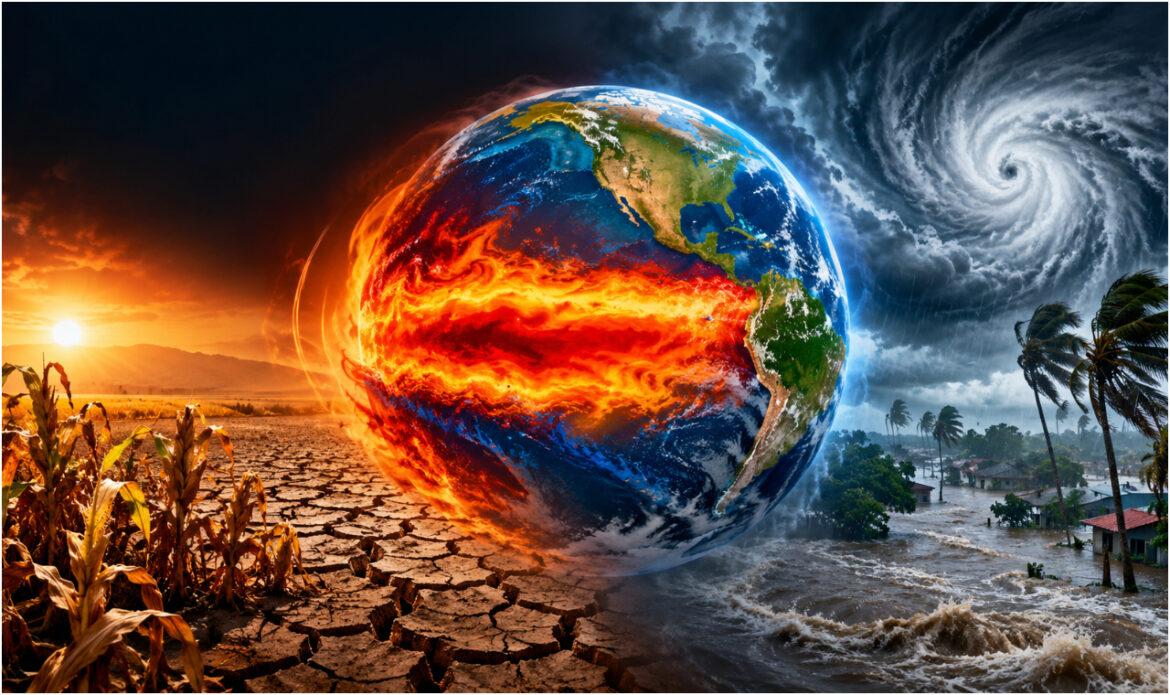
Climate disruptions are intensifying across the globe, with meteorologists warning that a “super El Niño” is set to strike with severe force in the coming months as the planet reels under scorching heat. A new report released by the Climate Impact Lab has raised serious alarm, projecting that hundreds of thousands of lives, particularly in poorer nations, could be lost to extreme heat as a result.
According to the report, at least 450,000 additional deaths could occur worldwide between September 2026 and February 2027 due to elevated temperatures and heatwaves, a toll over and above the average mortality typically recorded during that period. The findings, based on climate data spanning from 1996 to 2025, also note that this August ranked as the hottest August on record since global record-keeping began in 1901.
The report warns that poor and developing nations will bear the heaviest cost of the El Niño effect. In Africa’s Sahel region, approximately 66,800 deaths are projected across nine countries, with Nigeria alone accounting for an estimated 31,400 fatalities, followed by Sudan (17,500), Niger (10,000), and Chad (8,000). The report notes that populations lacking adequate healthcare and housing infrastructure are emerging as the primary victims of these climate shifts.
Asia is also expected to face severe consequences. Southeast Asian nations, including the Philippines, Vietnam, Thailand, and Cambodia, are collectively projected to see around 19,400 additional deaths, while Indonesia alone could suffer roughly 19,300 fatalities. In India, rising temperatures are expected to claim approximately 15,800 lives, with Brazil projected to see 13,300 deaths. The report further cautions that unusually high temperatures during the upcoming summer season in India and Pakistan could drive a steady rise in the death toll.
The World Meteorological Organization has noted that the El Niño pattern has not yet fully developed but is expected to strengthen in the coming months, peaking around November and December, with its effects likely persisting until February 2027. The US National Oceanic and Atmospheric Administration has projected that sea surface temperatures along the equatorial Pacific could rise by up to 1.8 degrees Celsius, with the Northern Hemisphere expected to bear the brunt of the impact. The Climate Impact Lab emphasized that these warnings are not intended to cause alarm but to prompt governments to act swiftly, recommending measures such as early heat warnings, the establishment of urban cooling centers, safeguarding drinking water supplies, protecting outdoor workers, and preparing emergency medical services to help save thousands of lives.