





- Ravi Prakash

Five days have passed since a massive disaster struck Nepal, and with each passing hour, fresh videos continue to emerge from the disaster zone — some so frightening to watch, others so inexplicable that it remains difficult to comprehend how such devastation unfolded.
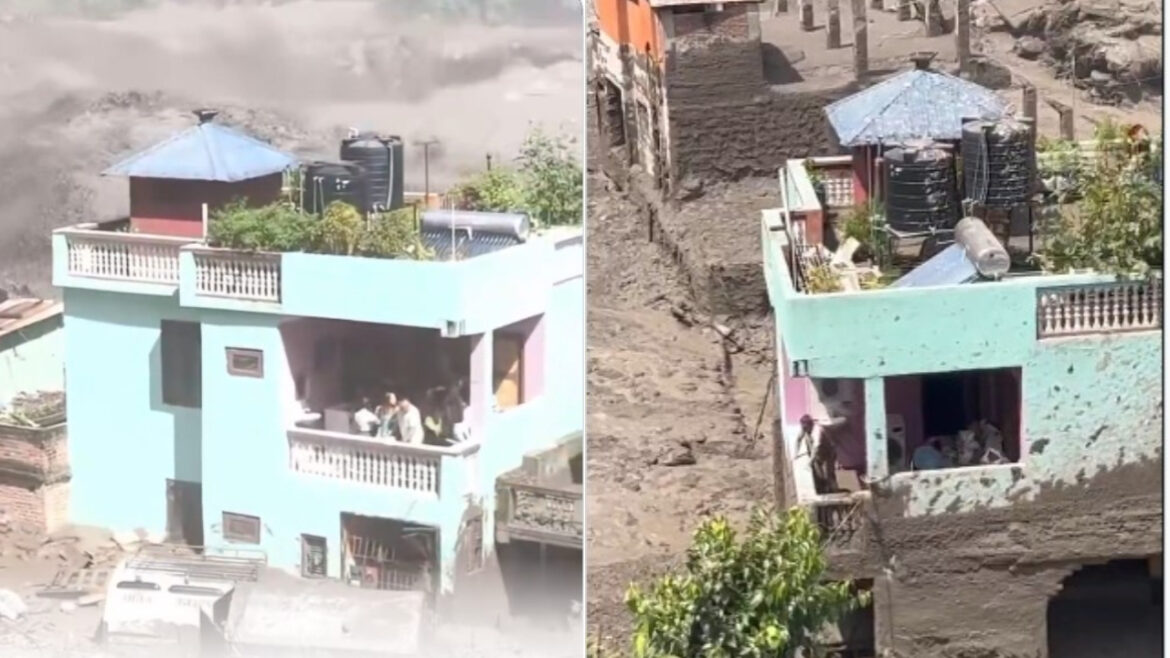
Among the videos that have gone viral, one shows a small green-painted house with five or six people visible inside. Around it, floodwaters rage violently on all four sides, flowing at extraordinary speed, with the entire surrounding area already submerged. Despite the ferocity of the flood, the house itself remained standing, refusing to be swept away. The moment the video surfaced, it triggered intense speculation on social media over the fate of the family inside — whether they had survived, whether the house had since been washed away, or whether they remained trapped inside in fear. The central mystery, given the scale of destruction around it, was how the structure had withstood the deluge at all. Hours later, a follow-up video from the same location brought relief: the house remained intact, and the family inside was confirmed safe.
This, however, was only the first of many such videos to emerge from Nepal. Some capture miraculous survivals; others reveal losses on an unprecedented scale. Several clips illustrate, in stark terms, just how rapidly the floodwaters advanced — raising urgent questions about what triggered such a massive flood, whether it was a sudden flash flood or the result of some other underlying cause.
One video, just 25 seconds long, captures the sheer terror of the moment: a massive surge of water mixed with mud, rocks and debris crashing through with no warning. Reports accompanying the footage suggest that approximately 70 to 80 people may have died in this single incident. Victims had no time to think, let alone flee, before the wall of water, mud and debris swept through, altering the landscape within seconds. Unlike a gradual rise in water levels, this was an instantaneous surge that carried away everything in its path. A subsequent video depicts the flood bearing down directly on people, offering an even starker illustration of the danger.
Another video sparked considerable debate online after showing a man continuing to film even as floodwaters rushed toward him, prompting widespread concern — and speculation on social media — that the footage may have been his last. As the waters surged along with mud and debris, the scene transformed within moments, deepening fears for his safety. It later emerged that the man had indeed become trapped in the flood, and after a period of uncertainty over his fate, he was rescued by helicopter.
In a separate, more harrowing account, a man filming with a handheld camera found himself caught directly in the path of the flood and was seen running for his life as the waters chased him from behind. The footage captures both his panic and disorientation as he fled while continuing to film the flood behind him. It should be noted that what became of this individual afterward remains unknown, and there is no confirmation on whether he escaped safely — a detail that should not be speculated upon. The footage nonetheless underscores the extreme speed at which the flood advanced.
A further video, lasting just 23 seconds, shows a young couple casually filming themselves, apparently unaware of the danger closing in around them. Reports indicate the couple went missing after the flash flood struck shortly afterward. While the video remains in circulation, their current whereabouts are unknown. It should be emphasized that there is no confirmed information establishing that the couple died in the flood, though the fact that the two individuals seen smiling in the footage have not been located since has caused considerable distress. Each video connected to this disaster, officials and observers note, represents a human story — whether of a family, a couple, or an individual fleeing for survival, with families elsewhere still awaiting news of missing loved ones.
Amid the grim footage, one story offered a rare moment of hope. After the floodwaters receded, leaving behind mounds of debris, a two-year-old child was found to be trapped underneath. The child’s whereabouts remained unknown for three days, but rescue teams continued their search without pause. Remarkably, the child was found alive after three days and was safely extracted from the debris by rescue personnel.
Such accounts illustrate the dual nature of the unfolding disaster — instances of tragedy and devastating loss on one hand, and ongoing rescue efforts and survivals on the other. Footage of the Nepal Army’s rescue operations further captured this dynamic: as the floodwaters subsided, army personnel moved swiftly to extract numerous victims trapped in mud up to their necks, who had been unable to free themselves unaided. Personnel carried out the rescues despite considerable risk to their own safety, successfully bringing all trapped individuals to safety — an effort that has drawn widespread praise for the Nepal Army’s role in the response.
Collectively, the videos circulating on social media — a house that withstood the flood, a man who ran for his life, a couple whose fate remains unknown, a two-year-old rescued alive after three days, and the Nepal Army’s rescue of those trapped in mud — represent far more than viral content. Each carries a human story reflecting both tragedy and resilience, loss and survival.
The disaster has nonetheless left behind significant unanswered questions. Authorities and experts are yet to determine the precise cause: whether the flooding resulted from an avalanche or rockfall, a glacial lake outburst following a natural blockage of water, or was influenced by broader climate change impacts. Central to these questions is whether such disasters can be identified and forecast in advance, given that the Himalayan region is not merely a mountain range but a lifeline tied to the lives of hundreds of millions of people and the principal source of major river systems across Asia. As such, officials note, this disaster in Nepal cannot be viewed in isolation but as a broader warning for the entire Himalayan region.
While the precise timing of natural disasters remains unpredictable, scientific and technological tools offer the potential to identify early warning signs in advance. This underscores the need for enhanced monitoring and stronger early warning systems, with all response mechanisms kept ready in advance to minimize loss of life when such disasters recur. For families who have lost loved ones, no explanation can reverse that loss, while survivors are likely to carry the memory of these events for the rest of their lives. Rescue personnel involved in the response efforts have been widely commended for their work. While the immediate crisis in Nepal may be subsiding, the disaster has left behind numerous questions that remain to be answered.