





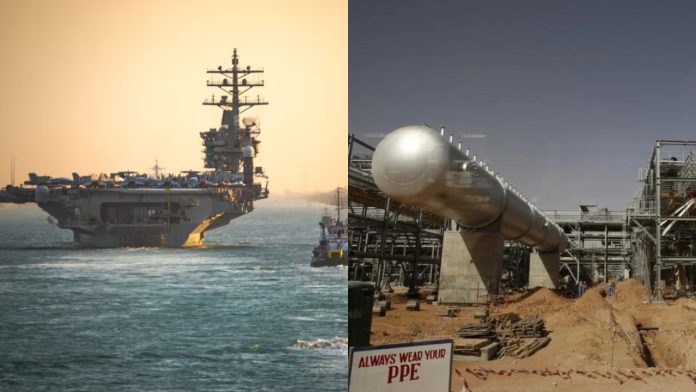
Iran-backed Houthi forces in Yemen announced on Monday that they will impose a maritime blockade on Saudi Arabia. This comes at a time when Iran has already shut down the Strait of Hormuz, triggering a severe global energy crisis. This sensational decision by the Houthis has pushed international oil markets into even deeper concern.
There is no clarity yet on exactly how the Houthis will enforce this maritime blockade against their northern neighbor Saudi Arabia along the Red Sea coast, or whether they will resume attacks on commercial vessels. However, since Yemen sits at the Bab el-Mandeb Strait — the southern gateway to the Red Sea — closing it risks triggering fresh tensions in the energy crisis and further escalating the US-Iran conflict.
With transport already halted in the Strait of Hormuz, the Red Sea has become a critical alternative route for Gulf oil products. If this route is also disrupted, it would mean two major oil export routes in the Middle East shutting down simultaneously. After Israel and America carried out strikes on February 28, Iran partially closed the Strait of Hormuz, prompting Saudi Arabia to divert more than 70% of its regular daily crude oil exports to the Red Sea port of Yanbu.
Ships departing from Yanbu port travel north through the Suez Canal toward Europe, and south through Bab el-Mandeb toward Asia. According to Kpler and Signal Ocean data, Yanbu’s exports, which previously stood at 973,000 barrels a day, have risen to an average of 4 million barrels per day (bpd) in recent weeks. Similarly, the total volume of petroleum passing through Bab el-Mandeb in June reached 7.4 million barrels per day — equivalent to nearly 7% of global oil production.
Saudi Arabia is also considering extending its oil pipeline to the Red Sea coast. Such measures have played a key role in preventing a sharper rise in international oil prices. When the Houthis first launched attacks in the Red Sea in November 2023, Gulf oil exports continued without major disruption. However, the current situation is far more different and concerning compared to the past.
The Houthis emerged in the 1990s in northern Yemen as a military, political, and religious movement. They waged a guerrilla insurgency against the government in Sanaa. For over a decade, they have been engaged in a civil war against Yemen’s internationally recognized, Saudi-backed government. However, since the Houthis do not recognize Iran’s Supreme Leader as their supreme religious authority, their relationship with Iran differs somewhat from groups like Hezbollah.
Last week, Yemen’s internationally recognized government struck Sanaa airport to prevent an Iranian aircraft from landing, ending the peace agreement that had been in place since 2022. Blaming Saudi Arabia for this, the Houthis fired missiles at Abha airport in southwestern Saudi Arabia. Senior Houthi leader Mohammed al-Farah warned that if the situation escalates further, they would close Bab el-Mandeb.
Following the Hamas attack of October 7, 2023, and Israel’s subsequent military operations in Gaza, the Houthis began attacking ships in the Red Sea in support of the Palestinians. This forced major shipping companies like Maersk and Hapag-Lloyd to redirect their vessels around the African continent instead of through the Suez Canal — a longer and costlier route. As a result, transport through the Suez Canal fell to its lowest level in 50 years, a decline of 52%.
The United States led several strikes aimed at restoring free maritime passage in the Red Sea, shooting down hundreds of Houthi drones and missiles in the process. Even so, Houthi attacks continued and only fully stopped after the Gaza ceasefire came into effect last October. Although the Houthis recently warned they would ban Israeli-linked vessels, companies like Maersk have been preparing to resume Red Sea voyages.
While Hezbollah and Iraqi groups became involved early on in the ongoing Iran-US-Israel conflict, the Houthis had adopted a wait-and-watch approach for some time. However, after carrying out a few attacks on Israel in March and April, the Houthis have now imposed a maritime blockade on Saudi Arabia, alleging that Saudi Arabia is blockading their own ports and airports. This threatens to completely halt Red Sea transport and further intensify the global energy crisis.
Severe Impact on India
The Houthi blockade on Saudi Arabia and other vessels in the Red Sea could cause serious economic, energy, and trade-related damage to India. The Red Sea and the Bab el-Mandeb Strait are critical trade routes for our country.
Soaring Oil Prices (Energy Crisis)
India imports more than 85% of its crude oil requirements. With Iran having already shut the Strait of Hormuz, and now the Red Sea route (via Yanbu port) also at risk of being paralyzed by the Houthis, global oil supply would be severely reduced. This would send international oil prices skyrocketing, causing a sharp rise in petrol and diesel prices in India.
Rising Prices of Essential Goods (Inflation)
Higher energy prices lead to higher freight costs. A rise in diesel prices increases the transport cost of vegetables, food grains, and other essential goods within the country, placing an inflationary burden on ordinary citizens.
Severe Disruption to Exports to Europe and America
Goods traveling from India to Europe, North America, and Africa typically pass through the Suez Canal–Red Sea route. With the Red Sea becoming risky, ships would be forced to travel around the African continent via the Cape of Good Hope, increasing travel time by 10 to 14 days. Shipping rates and insurance premiums could rise by 200% to 300%, causing severe financial losses to Indian exporters, particularly in textiles, engineering goods, and pharmaceuticals.
India also imports potash and other chemical fertilizers needed for its agricultural sector from Egypt, Jordan, and other Middle Eastern countries via the Red Sea route. If this route is shut down, it could lead to fertilizer shortages or price increases, adversely affecting Indian farmers and agricultural output.
Rising prices of imported oil, fertilizers, and other goods would put severe pressure on the Indian rupee, causing its value to fall against the dollar and further widening the country’s trade deficit.
Measures India Is Taking
Naval Security (Indian Navy Deployment): The Indian Navy has deployed warships and patrol aircraft in the Red Sea and Arabian Sea regions to protect Indian and other cargo vessels.
Support for Traders: The government is continuously engaging with exporters, working to ease the financial burden through alternative routes and credit facilities.
If these tensions continue for a prolonged period, it could pose a serious challenge to India’s economic recovery and growth rate.
The Red Sea is not merely a Middle East regional issue — any disruption there directly and adversely affects India’s economy, inflation, and the pockets of ordinary citizens.