





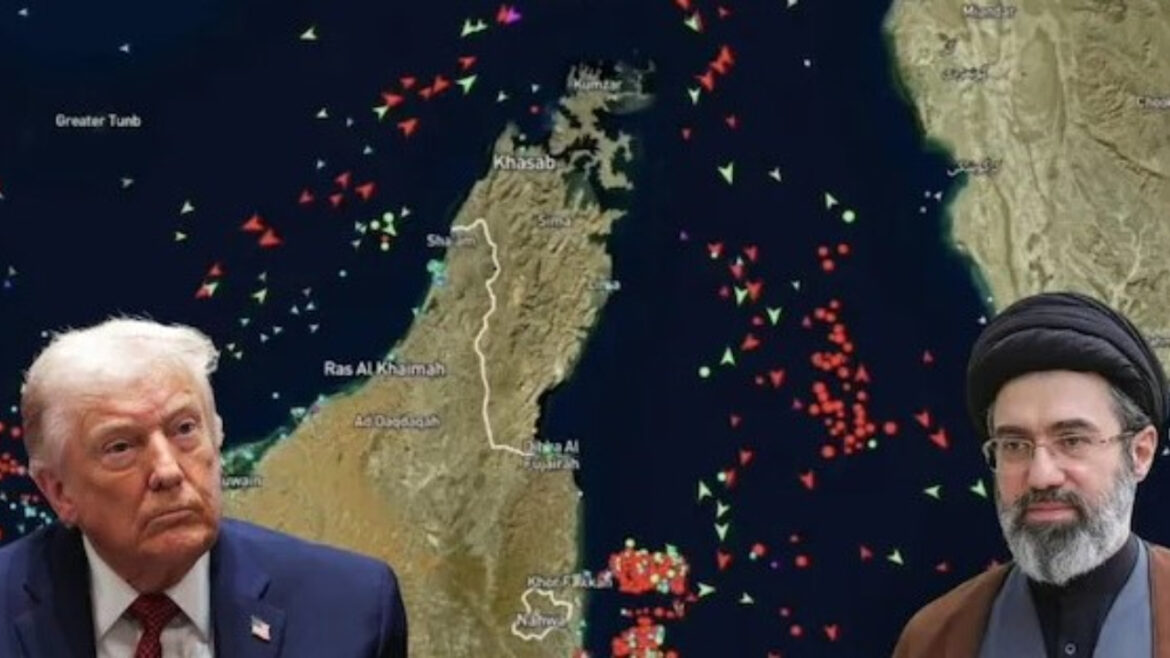
War clouds have returned to hover over the US and Iran even as the funeral procession for Iran’s former Supreme Leader Ayatollah Ali Khamenei continues. The ceasefire brokered through talks in Switzerland, following hostilities that began in late February, has unraveled within days. US President Donald Trump announced he was immediately scrapping the ceasefire, accusing Iranian forces of attacking commercial vessels transiting the Strait of Hormuz. Trump lashed out, claiming Iran’s leadership was in the wrong hands, and vowed to prevent the country from acquiring nuclear weapons, while Iran issued its own retaliatory warnings, threatening fierce strikes against any nation cooperating with the US against it.
The immediate trigger for the fresh tensions was a dispute over “Article 5,” a crucial clause in the US-Iran agreement. Under this article, Iran had agreed to immediately restore the movement of commercial vessels stalled at the Strait of Hormuz during the war, refrain from charging any fees on those vessels for 60 days, and clear naval mines from the strait within 30 days. However, sharp disagreements arose over implementation — Iran proposed charging fees on vessels, which the US flatly rejected. The dispute also extended to geo-strategic shipping routes: Iran insisted vessels use its traditional shipping lanes, while the US wanted traffic routed through a new path near the Omani coast. Iran, which views the Strait of Hormuz as its defensive shield, accused the US of exploiting Article 5 for its own interests. As both sides competed for control over Hormuz, Iran’s attack on vessels near the Omani coast and the US’s swift deployment of fighter jets in response happened in quick succession.
Alongside scrapping the ceasefire, the US also withdrew the temporary oil trade relief it had granted Iran under the Switzerland agreement. The US Treasury’s Office of Foreign Assets Control (OFAC) revoked “General License X,” which had earlier eased restrictions on Iran’s crude oil and petrochemical product sales from June 21, 2026 to August 21, 2026. With the license now cancelled, full US sanctions on Iran’s oil trade are back in force.
Iran is currently in mourning for Khamenei, whose funeral procession, which began on July 4, is set to conclude with burial in Mashhad on July 9. It was at this very moment that the situation took a sharp turn for the worse. In protest against Iran’s attacks on commercial vessels in the Strait of Hormuz, US Central Command (CENTCOM) struck key military installations in southwestern Iran, including Qeshm Island, Sirik, and Bandar Abbas.
These developments are having a severe negative impact on the global economy. Shipping through the Strait of Hormuz has been disrupted ever since Israel and the US first struck Iran on February 28. With the US now formally scrapping the ceasefire, global stock markets have taken a heavy hit. The international community has voiced deep concern as the threat of a worldwide oil, gas, and energy crisis looms once again.