





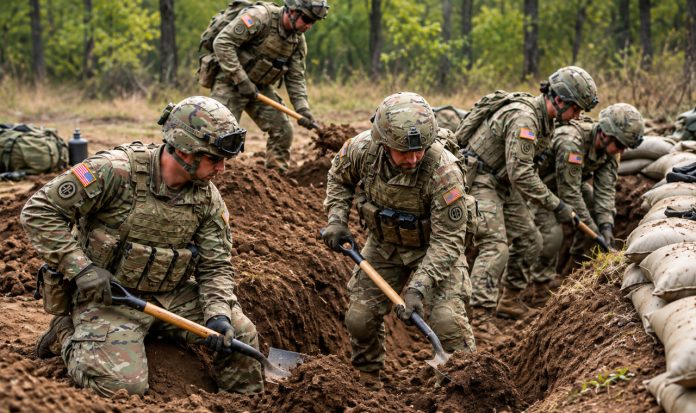
The US Army has begun training troops to bury large numbers of fallen soldiers in temporary graves, rehearsing how the military would respond if it suffered heavy casualties in an ongoing war. The Army says it has not needed to carry out such burials on a large scale since the Korean War.
The exercise at Fort Bragg brought together engineers, preventive medicine teams, chaplains and fatality management specialists. To make the drill realistic, engineers used heavy equipment to dig and refill burial trenches holding mock remains made from skeletal models and water containers. The Army said the aim is to preserve bodies until they can be identified and returned to the United States. It was also the first time in more than 20 years that Army chaplains and religious affairs personnel were trained to help with temporary gravedigging.
The drills exposed gaps in existing doctrine. The Army’s written standards call for seven feet between burial rows, but crews found that too narrow for a bulldozer to pass without disturbing neighboring trenches. Officials describe the exercise as part of a broader effort to prepare for high-intensity warfare. The stated purpose is to protect sanitation, morale and the dignity of the dead when evacuation is not possible.
The Korean War is the Army’s reference point for this kind of operation. Nearly 37,000 US personnel were killed in that 1950–53 conflict. The Army’s handling of the dead then was a system that recovered, identified and repatriated US servicemen, the first time the US returned its dead during major combat operations. The training will continue next spring with a third phase adding security, medical facilities and a collection point for remains.
The Army has not tied the training to any specific conflict, including tensions with Iran. Claims circulating on social media about the number of burials planned, or about US troop deaths near Iran’s borders, were not confirmed in the Army’s account or in the reporting reviewed. Those details should be treated as unverified until supported by official statements.