




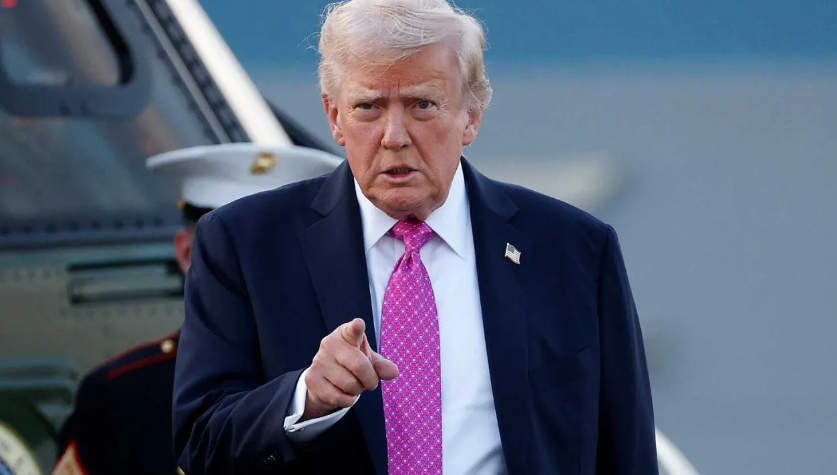
A pivotal development has taken place that could bring an end to the long-standing tensions and military confrontations between the United States and Iran. US President Donald Trump officially announced that the war with Iran is over. He revealed that a “peace deal” needed to establish peace with the country is nearly complete, and that both nations may sign it this weekend at a European venue.
Speaking at a tele-rally held in support of Burt Jones, who is running for Governor of Georgia, Trump clarified that Iran has agreed to America’s core demand — never to develop nuclear weapons — and described it as a very strong and comprehensive agreement.
International media reports indicate that Geneva, Switzerland, is set to host this historic peace deal. There is a possibility that the Memorandum of Understanding (MoU) could be signed by Sunday, the 14th of this month. US Vice President JD Vance and Iranian Parliament Speaker Mohammad Bagher Ghalibaf are expected to attend the signing ceremony on behalf of their respective countries. Trump has already spoken with leaders of Middle Eastern nations such as Qatar, UAE, Saudi Arabia, and Pakistan regarding the progress of these talks. International stock markets also responded positively to the news of the deal. The US stated that once the peace agreement is finalized, the strategically vital Strait of Hormuz — critical for international oil transport — will reopen as normal.
However, Iran is displaying a somewhat different and cautious stance on the agreement. Iranian Foreign Ministry spokesperson Ismail Baghaei made it clear that no final decision has been made yet regarding the peace deal. Iran insists on protecting its sovereignty in any agreement reached with the US — particularly its right to continue uranium enrichment in the future, the freedom to retain enriched stockpiles, and maintaining control over the strategic Strait of Hormuz, as it declared on Friday. According to Iran’s state news agency IRNA, following this preliminary agreement, both countries will need to hold further extended talks for another 60 days on Iran’s nuclear program.
According to a draft leaked by Iranian media outlet Mehr News Agency, the peace deal contains several key economic and military provisions favorable to Iran. The main points include the release of $24 billion in Iranian assets previously frozen by the US, lifting of sanctions on Iranian oil and petrochemical exports, and the removal of the US Navy’s blockade on Iranian ports. In addition, the draft includes at least $300 billion in financial aid for Iran’s reconstruction and an end to ongoing hostilities in various regions including Lebanon. However, Iran has set a condition — it will only come to the table for final negotiations if the US first releases half of its frozen funds and eases oil sanctions — making it a matter of global interest as to how this historic deal will ultimately conclude.