





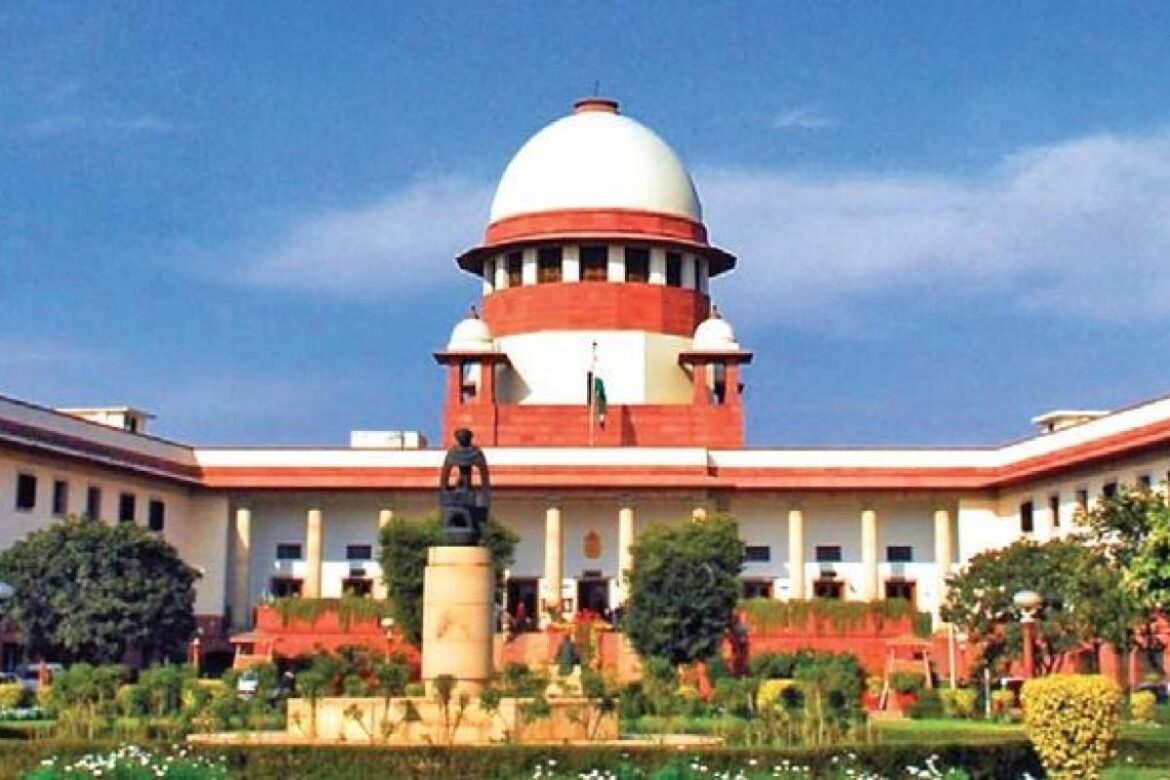
The apex court has once again expressed strong displeasure over the NEET-UG paper leak controversy that has caused a nationwide uproar. The court made clear that the Central Government and the National Testing Agency (NTA) must now finally take firm control over the serious lapses occurring in the conduct of examinations. Warning that incidents jeopardizing the futures of lakhs of students must never be allowed to recur, the court directed that a detailed report be submitted on the steps taken in this matter.
The Supreme Court bench directed the Centre and the NTA to file a special affidavit explaining how permanent, systemic reforms are being implemented, stating that the issue cannot be resolved through temporary adjustments or superficial measures. The court noted that it would closely examine what steps have been taken to prevent paper leaks, and that a mechanism ensuring full-scale security for students’ futures must be put in place.
As part of overhauling the examination system, the court directed that complete details be furnished across 10 key areas. It asked that clarity be provided on what changes have been introduced at the pre-exam, during-exam, and post-exam stages, particularly covering aspects such as digital infrastructure, research, transparency, administrative processes, and the effective use of human resources.
Commenting on the use of Indian Air Force (IAF) services for the secure transport of examination papers, Justice P.S. Narasimha made clear that this was merely a stopgap measure. The bench noted that deploying the armed forces or air force is not a permanent solution, and that there is an urgent need to build a robust, independent technological system dedicated to examination security.
The court also referred to the earlier stated plan to conduct the NEET exam through a Computer-Based Test (CBT) format going forward, and asked that the affidavit include details of the changes being made to transition to an online format, along with the concrete measures being taken to ensure cybersecurity and the protection of candidates’ data.
To prevent impersonation at examination centers and to speed up candidate identification, the court sought clarity on proposals to use modern biometric technologies similar to “DigiYatra,” which is used at airports. Such measures are expected to enhance transparency in entrance examinations.
The court also inquired about the progress on the governing board and expert committees set to be established for overseeing examinations. Responding to this, Solicitor General Tushar Mehta stated that the Centre is taking all possible steps in the interest of students and requested additional time to file a comprehensive affidavit. The bench agreed to this request and adjourned the hearing accordingly.
In a highly significant statement, the Supreme Court declared that it would not close this matter after just one or two hearings, but would monitor reforms to national-level examinations such as NEET throughout the year. Making clear that this oversight would continue until credibility in the conduct of examinations is fully restored, the court adjourned the next hearing in the case to July 27 (Monday).