





- Ravi Prakash

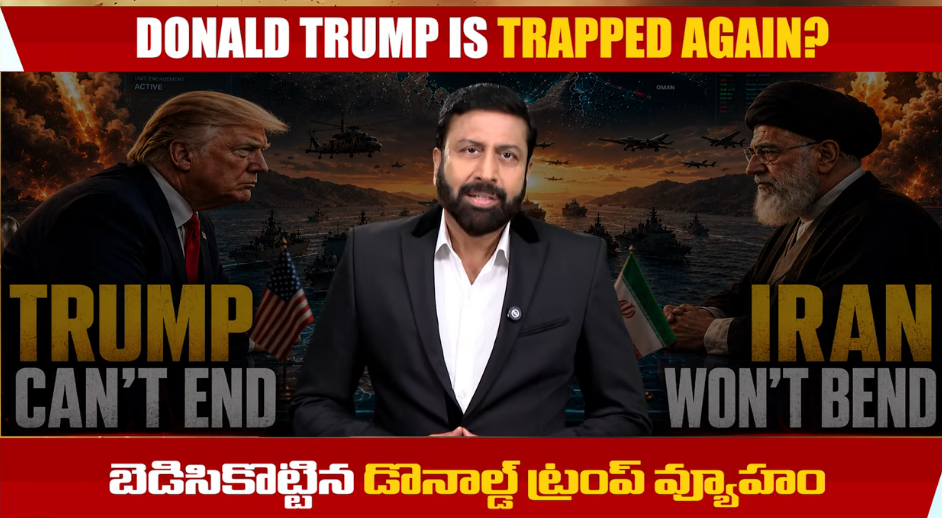
Four months ago, Donald Trump convinced the world he had found a formula to force Iran into submission — pairing psychological pressure with airstrikes on Iranian military installations, betting that relentless bombardment would leave Tehran no option but to negotiate on Washington’s terms. He repeatedly and publicly declared that surrender was Iran’s only path forward. Today, however, that strategy appears to have backfired, with the situation reversing dramatically. Rather than backing down, Iran has effectively sounded the alarm for full-scale war.
Over the past four days, American fighter jets have carried out intense strikes on Iranian territory, while Iran has responded with missile and drone attacks aimed at U.S. military installations across the Gulf, rattling nations throughout the region. According to a statement from Iran’s military, strikes were carried out against U.S. airbases, command centers, oil depots, and logistics hubs in Qatar, Kuwait, Bahrain, and Jordan. The White House offers a different account, saying its forces destroyed Iranian missile bases, naval facilities, and air defense systems in order to clear Iranian obstruction of the Strait of Hormuz.
By most measures, this level of damage should have left Iran unable to recover, with its leadership expected to capitulate to Trump. Instead, the conflict has spread well beyond the two nations’ borders, unsettling the entire Gulf region and drawing global concern. Visibly frustrated by Iran’s resistance, Trump issued his strongest warning yet in a recent interview, stating that if Iran does not yield on the Strait of Hormuz, the United States would next target Iranian power plants, bridges, and critical infrastructure, warning of total destruction if Tehran fails to compromise.
This is not the first time Trump has issued such warnings — a similar statement was made earlier this year, and Tehran did not relent then either, just as it shows no sign of relenting now. These developments have triggered a significant debate within the United States itself. A widely discussed report in The New York Times noted that, for the first time in his career, Trump is facing an adversary that refuses to bend to his rules, prompting American media outlets themselves to question whether the world’s leading superpower is struggling against Iran. The question of whether Trump has walked into a trap of Iran’s making has become one of the most closely watched geopolitical storylines at present, as the confrontation appears set to reshape long-standing power dynamics across the Middle East and beyond.
Trump had believed that continuous strikes could bring Iran under control, but developments in recent days suggest otherwise. While the United States maintains it has destroyed Iranian missile bases and defense systems, Iran claims the real war has only just begun, asserting that Gulf nations are now witnessing the strength of its missile capabilities. According to Iran’s Revolutionary Guard Corps, retaliatory strikes on the U.S. have been launched under the name “Operation Nasr,” while Iran’s regular army has separately announced a parallel military campaign called “Operation Lightning,” both said to be targeting American military bases across the region — including the airbase in Jordan hosting U.S. fighter jets, the naval command center in Bahrain, and American military supply depots, which Iran says its missiles have struck heavily. Iranian state media has released satellite imagery and video footage in support of these claims.
The most significant claim, however, concerns Kuwait. According to Iranian media and the Revolutionary Guard Corps, Iranian drones struck the KGL Logistics Complex at Mina Abdullah in Kuwait, which Iran considers a critical logistics and support hub for U.S. forces in the Middle East, releasing satellite visuals in support of the claim. Neither the United States nor Kuwait has officially confirmed these attacks. If accurate, such strikes would represent a serious escalation beyond conventional missile warfare, since modern conflicts increasingly target fuel, weapons, and transport infrastructure alongside military assets directly, making supply and logistics centers a central target in any prolonged war.
Social media visuals showing fires in industrial areas of Qatar and Kuwait have circulated alongside these claims, though independent verification remains difficult in an active conflict zone. What is clear is that the confrontation has not remained confined to Iranian and American territory — U.S. military assets stationed throughout the Gulf are increasingly being drawn into the fighting, a development that is reshaping the broader geopolitical picture and raising the stakes for Gulf nations that host American bases. The central question is no longer whether Iran can withstand the pressure, but whether this conflict can be brought to an end before the wider Gulf region suffers catastrophic damage.
At the heart of the standoff lies the Strait of Hormuz, a narrow maritime passage whose control significantly explains why Trump, despite commanding the world’s most powerful military, has been unable to force Iran into submission. The conflict is no longer solely about missiles and airstrikes — it now centers on control over one of the world’s most important energy corridors. Weeks ago, behind-the-scenes diplomacy, aided by mediation from several countries, produced a ceasefire understanding between Washington and Tehran, leading many to believe the conflict had ended. That truce proved short-lived. Both sides have since accused each other of violating the agreement, with Iran alleging that the U.S. sought to reroute commercial shipping through Oman as part of a broader strategic maneuver, while Washington maintains it was merely protecting freedom of navigation rather than breaking any rules.
As tensions escalated, Trump announced that the United States would provide protection for ships transiting the Strait of Hormuz — but attached a 20 percent toll tax for that protection. The proposal drew sharp criticism internationally, with experts questioning how the U.S. could impose a toll on an international shipping route along the Iran-Oman border, and other nations wondering how such American assertiveness could be reconciled with broader opposition to Iranian unilateralism. Within 24 hours, the proposal was quietly withdrawn, forcing Trump into a reversal that has since become a major talking point in global politics, underscoring how difficult it is in practice to control the Strait of Hormuz, regardless of rhetoric.
For Iran, the strait represents far more than a shipping lane — it is viewed as its most significant strategic leverage against the United States. Any disruption there threatens to destabilize global energy markets and drive crude oil prices sharply higher, with consequences reaching far beyond Washington to the global economy at large. Analysts increasingly argue that the real conflict is being waged not on Iranian soil but along this maritime corridor, since whoever controls this narrow passage holds significant influence over global trade and international politics — making this less a war with Iran alone than a much larger strategic trap, one in which Trump now appears deeply entangled.
Perhaps the most significant turn in this conflict is unfolding not on the battlefield but within the United States itself. For the first time since the confrontation began, leading American newspapers and experts have openly criticized Trump’s approach to Iran, with a New York Times report proving particularly notable in stating that Trump, for the first time in his career, has encountered an adversary who will not submit. This marks a significant departure from his usual approach — one built on maximum pressure, maximum sanctions, and maximum military force, aimed at compelling adversaries to accept American terms. American think tanks have openly stated that this approach is simply not working with Iran. Trump had expected that sufficient military pressure would force Iranian leadership to capitulate; instead, Iran has responded with sustained counterattacks, retaliating against each American strike in its own manner, further escalating rather than de-escalating the conflict.
The New York Times report also noted that Trump’s public statements have shifted from day to day — announcing the Hormuz toll tax plan on one day, then quietly abandoning it within 24 hours, a pattern of reversals that has eroded confidence in the White House’s strategy not just among adversaries but among American allies as well. Johns Hopkins University professor Vali Nasr has observed that Iran is simply not responding to the negotiating approach Trump has used successfully elsewhere, with Tehran showing no sign of yielding to American pressure as Washington had anticipated. Former U.S. diplomat Aaron David Miller has echoed this assessment, noting that Trump is facing an unusually resolute adversary this time, with Iran’s core objective being to retain control of the Strait of Hormuz and further consolidate its position across the Gulf region. Analysts at the Brookings Institution have similarly noted that while other nations may be deterred by Trump’s aggressive posture, Iran has taken the opposite approach — absorbing American military pressure while steadily increasing the costs borne by the United States. This distinction matters significantly, as the conflict is increasingly framed not simply as a contest of arms but as a test of endurance.
While American military superiority remains widely acknowledged, history has repeatedly shown that military strength alone does not guarantee political success — particularly when an adversary is convinced that time favors its position, a dynamic analysts say the United States is now confronting directly. American analysts themselves acknowledge that Trump is facing what may be the most dangerous foreign policy challenge of his presidency, with the pressing question no longer being whether the U.S. can strike Iran, but whether military pressure alone can counter Iran’s strategy — or whether Trump risks becoming further entangled in it.
Many observers argue that the international community is making a significant misjudgment by treating this as a straightforward war between Iran and the United States, or merely a matter of missile strikes and airstrikes, or even a personal contest between Trump and Iranian leadership. At its core, this conflict is about control — over the world’s most critical shipping route, over global energy supply, and ultimately over significant influence within the global economy. Despite substantial military and economic losses, Iran remains firmly convinced that the Strait of Hormuz constitutes its greatest strategic asset, calculating that any disruption there will pressure the international community to push the United States toward negotiations.
The higher oil prices climb, the greater the cost imposed on the U.S.; the longer tensions persist, the stronger Iran’s negotiating position becomes. Iran’s parliament has now openly called for discarding the limited peace agreement reached with the U.S., while its military leadership has stated unequivocally that there is no possibility of relinquishing control of the Strait of Hormuz regardless of military pressure — indicating that Iran appears prepared for a prolonged confrontation, placing considerable pressure on Washington.
While American military superiority remains unquestioned, history has consistently demonstrated that military strength alone cannot guarantee victory, particularly in conflicts driven more by political calculation than battlefield outcomes. Each day the conflict continues sends ripples through global oil markets, drives up cargo insurance premiums, and disrupts international business activity, with even distant nations bearing significant economic consequences. India is no exception — continued instability in the Strait of Hormuz would likely drive up petrol and diesel prices domestically, contributing to broader inflationary pressure affecting ordinary households. This is why global attention remains fixed on the Gulf region, given concerns that further escalation could extend well beyond Iran, Israel, and the United States. The pressing question, analysts note, is not who fires the next missile, but whether diplomatic efforts can reopen this critical international waterway before broader economic damage occurs — a delay that would impose costs not only on nations directly involved in the conflict, but on millions of ordinary people worldwide who would face rising fuel and food prices as a result.
Perhaps the most significant miscalculation made by the United States was the assumption that this conflict would conclude swiftly. When military operations began, Washington anticipated that decisive strikes would compel Iranian leadership to negotiate from a position of weakness. Instead, the conflict has resurfaced under conditions far more dangerous than initially anticipated, driven largely by the strategic significance of the Strait of Hormuz — which Iran regards not merely as a waterway, but as substantial leverage over the United States, one it believes can offset losses incurred during the conflict. This has led Iran’s parliament to call for abandoning even the limited agreement reached with Washington, amid allegations that the U.S. attempted to establish an alternate shipping route in violation of existing understandings. Regardless of whether Washington accepts these claims, the underlying political reality is that mutual trust between the two nations has been significantly damaged — a condition under which ceasefire arrangements historically tend to be short-lived.
As The New York Times has emphasized, Trump, for the first time in his career, appears to be confronting an adversary that neither submits nor yields to pressure — a assessment shared by senior American diplomats, who note that while military power can destroy infrastructure and eliminate targets, it cannot by itself compel an adversary’s surrender, particularly one convinced that time is on its side. As a result, the conflict has taken an increasingly dangerous trajectory, with each new missile exchange raising tensions further and every disturbance in the Strait of Hormuz sending shockwaves through global oil markets — consequences that extend to household budgets as far away as India. Ultimately, the central question is no longer whether the United States can strike Iran, but whether Trump possesses a clear strategy to bring this conflict to a close. Entering a war, analysts note, is often far easier than finding a way out of it — a lesson this confrontation appears to be underscoring for the wider world.