





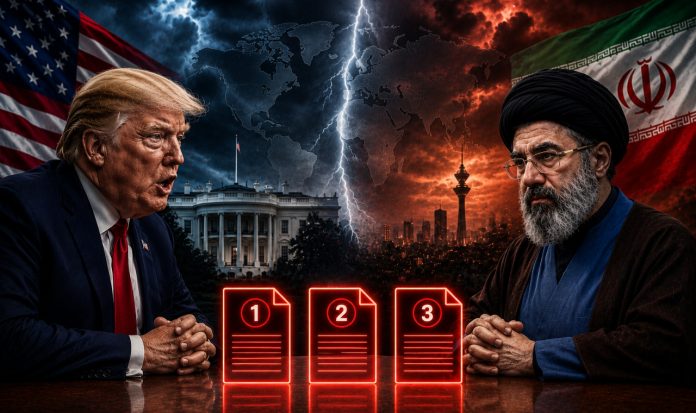
Tensions have flared between the two countries, with the situation in the Strait of Hormuz — a critical artery for global oil transportation — escalating sharply. This route is vital to global trade, and even a few hours’ closure of Hormuz could send oil and gold prices soaring worldwide. Tensions have risen further as Iran and the United States have carried out strikes against each other, with Washington reportedly making every effort to gain control over the Hormuz strait. Amid this, Iran issued a striking statement, saying it would agree to future peace talks with the US only if three conditions are met.
Iran’s first condition is that it wants full rights over Hormuz — the US must officially acknowledge that Iran alone holds complete control and authority over the Strait of Hormuz, and only then will Tehran agree to peace talks in the future. Its second condition is the immediate release of assets frozen under various sanctions — Iran has demanded that the US, along with its allied nations, unfreeze all such assets. Iran made clear that it would discuss any aspect of its nuclear program with the US only after these two conditions are fulfilled.
It also flatly stated that it would never accept any alternative shipping routes or arrangements set up to bypass the Hormuz region, with Iran’s Revolutionary Guards warning that not even a bird could fly over the area without their permission. That said, to avert another major war in the Middle East, Iran responded positively to the idea of diplomatic talks in cities such as Geneva, Doha, or Islamabad, mediated by countries like Oman and Pakistan.
Nearly a fifth of the world’s oil supply passes through this sea route, meaning even a minor clash or disruption in shipping there could send global oil prices skyrocketing and trigger a severe international economic crisis. Against this backdrop, it remains to be seen whether the Donald Trump administration will accept the conditions set by Iran.