





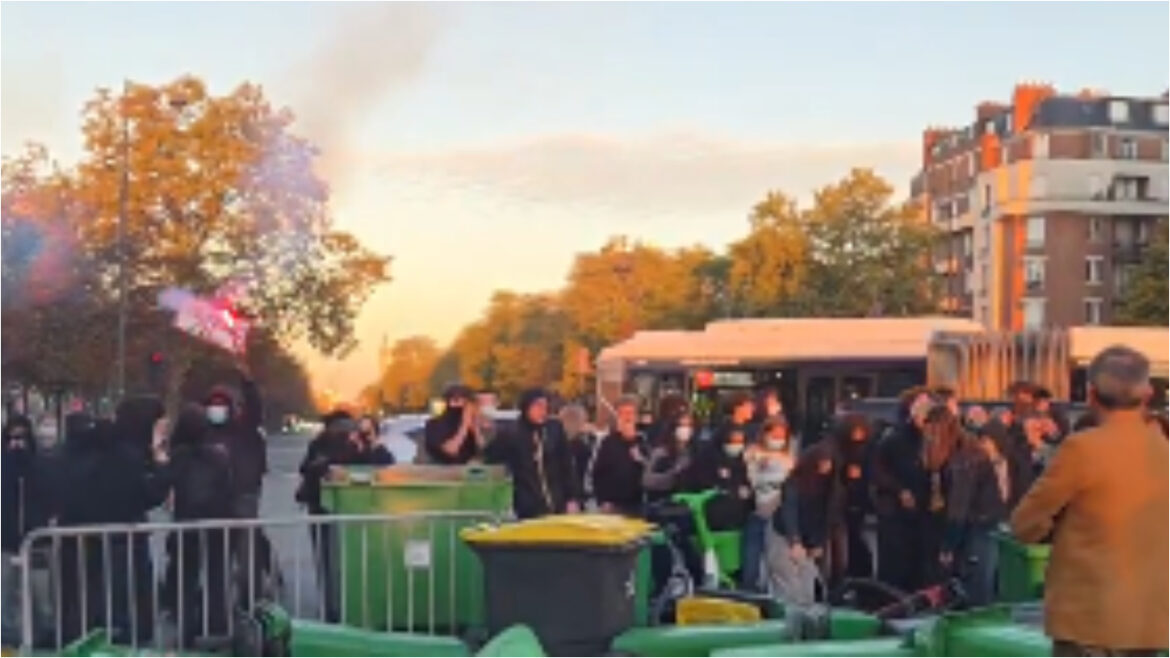
Student and teacher protests over crumbling school infrastructure and chronic staff shortages have turned violent across France, prompting the government to partially or fully close nearly 500 high schools nationwide. Education Minister Edouard Geffray announced the closures as a precautionary measure after the situation threatened to slip out of control.
The agitation began in mid-September and has spread rapidly to major cities, including Paris, Marseille and Strasbourg, placing mounting pressure on President Emmanuel Macron’s government. The movement is centred on the Saint-Exupéry high school near Paris. On September 17, teachers and students there jointly began protesting a shortage of teachers. Within days, the campaign had spread across the country.
What started peacefully has since been marred by violence. Protesters have set fire to roads and rubbish bins and carried out acts of vandalism, forcing police to deploy rubber bullets and tear gas. In the clashes so far, 24 schools have been damaged and 65 staff members, including 40 principals, have been injured. Security forces have arrested more than 4,000 protesters.
Protesters point to serious failings in the education system. Schools lack enough classrooms for their pupil numbers, with as many as 40 students packed into a single class. There is an acute shortage of qualified teachers, nurses and counsellors. Government reports themselves indicate that roughly 10 percent of teaching time is lost for want of proper replacement teachers.
Heat has been another grievance. Schools without air conditioning left students sitting exams in closed rooms in temperatures of 40 degrees Celsius during the summer heatwaves. The school day, which runs from 8 a.m. to 5 p.m., and what students describe as discrimination against pupils from disadvantaged areas have added to the anger.
The political fallout is widening. Ruling-camp and right-wing parties allege that left-wing leader Jean-Luc Melenchon is steering the protests from behind the scenes for electoral gain. The appearance of Palestinian and Algerian flags at the demonstrations has lent weight to those suspicions. The text provided does not offer evidence for the allegation.
Mr. Macron’s government is also contending with the rising influence of far-right leader Marine Le Pen and an economic crisis. While the government has said it will not tolerate violence, student unions have strongly condemned what they call excessive use of force by police. Protesters are demanding higher education funding in the 2027 budget, a demand that poses a major challenge for a government already grappling with a fiscal deficit.