





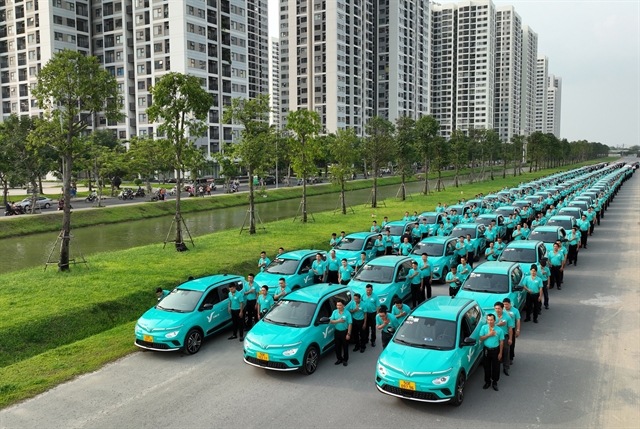
A new electric cab service has arrived on Hyderabad’s roads, and it is drawing a very different reaction depending on who is asked. For passengers, it promises a cleaner, safer and more spacious ride. For the drivers it hires, it promises a fixed monthly salary. But for drivers on other ride-hailing apps and for owners of private cab fleets, its arrival has raised a pressing question: how will they compete with a company that owns its cars, pays its drivers a salary and does not charge surge prices?
The service is Green SM, short for Green Smart Mobility, the ride-hailing arm of the Vietnamese EV maker VinFast’s parent group, Vin Group. Its green-liveried electric cars are already running across the city. This explainer sets out how the service works, what it offers passengers and drivers, and why existing operators are worried.
Who is Green SM and how did it reach Hyderabad?
Green SM first began operating in the Delhi NCR region. Hyderabad is the second Indian city where the company has launched its electric cab services, making the city an important test of whether its model can work beyond the capital.
The company has entered a market already shaped by large aggregators such as Ola and Uber, along with a network of private cab fleet owners who rent cars to drivers. Its arrival has therefore been described as stiff competition for both groups. About 2,000 Green SM cars have already come to the city.
How is Green SM different from Ola and Uber?
Three features set the company apart. First, it provides its service only with cars that it owns, rather than relying on vehicles owned by individual drivers. Second, it hires drivers on a monthly salary instead of paying them per trip. Third, it says it does not charge surge prices, even during peak-hour demand, when other platforms typically raise fares.
The company states that its fare is Rs 9 per kilometre. Some customers, however, say the price of a ride can differ from one trip to another, even when the stated per-kilometre rate remains the same. Passengers may want to check the fare shown at the time of booking.
What do passengers get?
The cars are electric, so they produce no tailpipe pollution, unlike petrol and diesel vehicles. The 7-seater vehicles also let a whole family travel in a single ride. On other services, a higher fare is usually charged once a group exceeds four passengers, but Green SM allows up to seven people on one booking.
Safety is a major selling point. Each car has interior and exterior cameras, an AI-based safety system and an emergency SOS button, which the company presents as reassurance for passengers. Drinking water and wet tissues are provided free of charge until the destination is reached.
The company also sets rules for its drivers. A driver must hold a licence and be over 22 years of age. Only candidates with a thorough understanding of road safety are selected, a step the company says reduces the risk of accidents. Drivers are expected to accept at least 90 per cent of the bookings that come to them. This is intended to address a common complaint about other platforms, where some drivers confirm rides only when the fare offered is high.
What do Green SM drivers get?
According to company representatives, drivers who work 12 hours a day can earn a salary of up to Rs 35,000 a month. For people who want to work as drivers but do not own a car, the offer is attractive, since it provides an income without the cost of buying a vehicle.
The company also bears the cost of energy. Drivers do not spend on petrol or diesel, and charging at EV stations is free for them, with the company covering the expense. Unlike drivers who rent cars from fleet owners, they do not pay daily rent or carry the burden of vehicle maintenance.
Other benefits include ESIC or private insurance and accident cover that applies across the country, along with comprehensive training in driving, road safety and customer service.
There is one caveat. At present, the salary is not tied to fixed working hours or trip targets. Company representatives, however, say such rules may be introduced soon, which could change what drivers must do to earn the full amount.
Why are existing drivers worried?
Experts say that if Green SM expands fully across the state, drivers on other apps will feel the effect. City residents are likely to pick Green SM cars most often for their convenience, and that could draw bookings away from other platforms.
The concern comes at a vulnerable time for many drivers. A large number have bought their vehicles on EMIs and manage their repayments from month-to-month earnings. At the same time, tourism trends and the state’s free bus scheme have already affected their incomes.
According to Telangana vehicle associations, about 1.5 lakh cab drivers work in the state. Another 10,000 or so have come from other states in search of work. All of them depend on their vehicles for a living. Because of this, some vehicle associations have demanded that Green SM not be given permission to operate.
Why are cab fleet owners at risk?
Industry sources say fleet owners may be the first to face difficulty. Many of them took loans to buy cars, which they rent out to drivers for a daily fee. Drivers who currently pay that rent and cover maintenance costs may prefer Green SM’s salaried job, which removes both burdens and offers a steady income.
If drivers move over, owners could struggle to find anyone to drive their cars. Even when vehicles stand idle, bank loan EMIs, insurance and maintenance costs still have to be paid. Small and medium-sized owners who run a large number of cars are expected to suffer the most.
Will all drivers be affected in the same way?
Not necessarily, according to Shaik Salahuddin, a vehicle association leader. He points out that drivers who own their cars and work on Ola or Uber can choose their hours. They can work only during the morning and evening rush, when demand is highest, and rest for the remainder of the day. Many of them may not be interested in a job that requires a 12-hour daily shift.
Even so, he warned that Green SM’s low and stable fares could attract passengers and reduce bookings for drivers with their own cars. If other aggregators cut their fares to compete, he said, the effect could ultimately fall on drivers’ earnings.
What to watch next
Several questions remain open. One is whether Green SM’s fares stay consistent, given customer reports of variation. Another is whether the company introduces working-hour rules or trip targets for its salaried drivers. A third is whether vehicle associations succeed in their demand that the company be denied permission. The answers will decide whether Green SM becomes a lasting competitor or a pressure point that forces the rest of the market to change.