





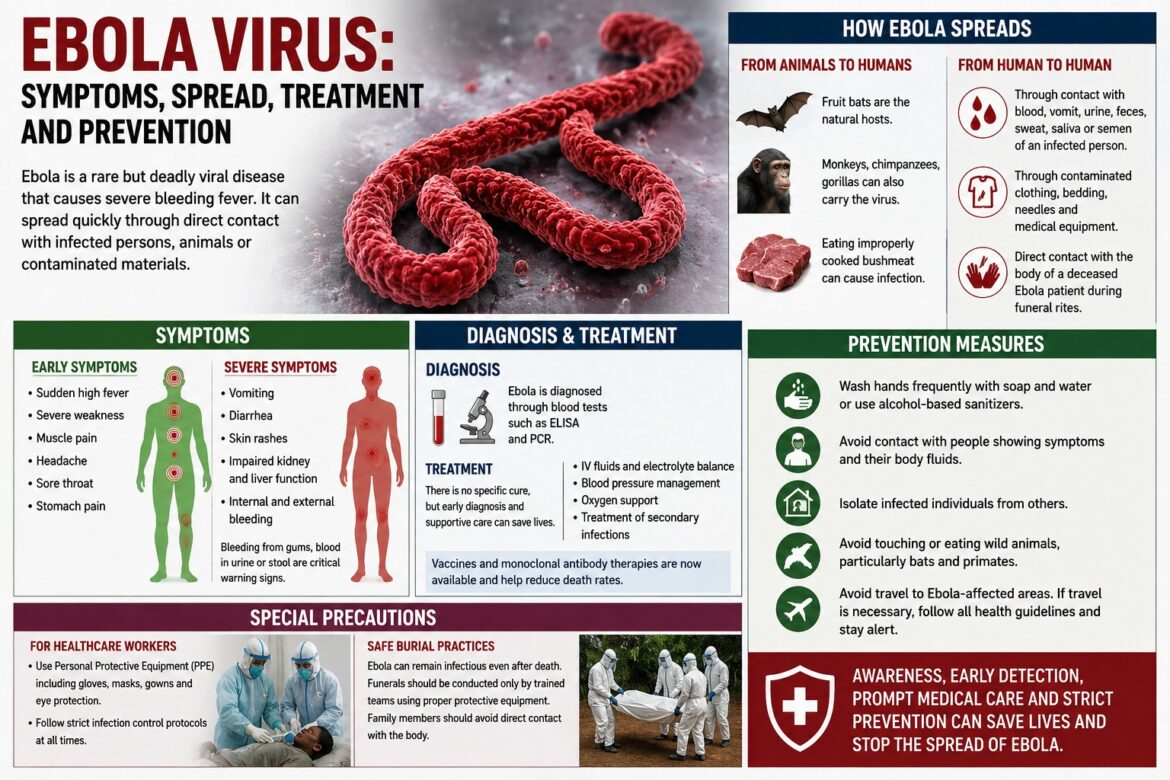
Ebola, one of the world’s deadliest viral diseases, continues to be a major public health concern due to its high fatality rate and rapid spread through direct contact with infected individuals. The virus causes a severe hemorrhagic fever that can lead to multiple organ failure and death if not diagnosed and treated promptly. Health experts stress that awareness of the disease, its symptoms, and preventive measures is crucial, particularly for people traveling from or residing in regions where Ebola cases have been reported.
How Ebola Spreads
Unlike airborne diseases, Ebola does not spread through the air. The virus is primarily transmitted from infected animals to humans and subsequently through human-to-human contact. Fruit bats are considered the natural reservoir of the virus, while monkeys, chimpanzees, and gorillas can also carry the infection.
Humans can contract Ebola through direct contact with infected animals or by consuming improperly cooked bushmeat. Once a person is infected, the virus spreads through bodily fluids such as blood, vomit, urine, feces, sweat, saliva, and semen. Contact with contaminated clothing, bedding, medical equipment, or needles can also transmit the virus. Health authorities warn that direct contact with the bodies of deceased Ebola victims during funeral rites remains one of the highest-risk sources of infection.
Symptoms and Disease Progression
The incubation period for Ebola ranges from two to 21 days, with symptoms typically appearing within eight to ten days of exposure. Infected individuals become contagious only after symptoms develop.
Early symptoms include sudden high fever, severe weakness, muscle pain, headache, stomach pain, and sore throat. As the disease progresses, patients may develop vomiting, diarrhea, skin rashes, and impaired kidney and liver function.
In severe cases, Ebola causes internal and external bleeding. Bleeding from the gums, blood in urine, and blood in stools are considered critical warning signs and require immediate medical intervention.
Diagnosis and Treatment
Medical experts advise individuals experiencing symptoms consistent with Ebola to seek urgent medical attention. The infection is confirmed through laboratory tests, including ELISA and PCR blood tests.
Although no definitive antiviral cure currently exists for Ebola, early diagnosis and intensive supportive care significantly improve survival rates. Treatment generally involves intravenous fluids to prevent dehydration, maintenance of electrolyte balance, blood pressure stabilization, oxygen therapy, and treatment of secondary infections.
Recent advancements in medical science have also led to the development of effective vaccines and monoclonal antibody therapies, which have helped reduce mortality rates during outbreaks.
Prevention Remains Key
Health authorities emphasize that prevention remains the most effective tool against Ebola. Frequent handwashing with soap and water or alcohol-based sanitizers, avoiding contact with infected individuals and their bodily fluids, and promptly isolating suspected cases are critical preventive measures.
People are also advised to avoid handling or consuming wild animal meat, particularly bats and primates, which are known carriers of the virus. Travelers to Ebola-affected regions are urged to follow public health advisories and exercise extreme caution.
Special Precautions for Healthcare Workers
Healthcare personnel treating Ebola patients must adhere to strict infection-control protocols. The use of Personal Protective Equipment (PPE), including gloves, masks, gowns, and eye protection, is mandatory to prevent exposure.
Authorities further caution that Ebola can remain infectious even after death. As a result, funeral procedures for Ebola victims should be conducted only under the supervision of trained health teams using appropriate protective measures. Family members are advised not to touch the deceased to minimize the risk of transmission.
Public health experts maintain that early detection, timely medical care, strict hygiene practices, and adherence to preventive guidelines remain essential in containing the spread of the deadly Ebola virus.