





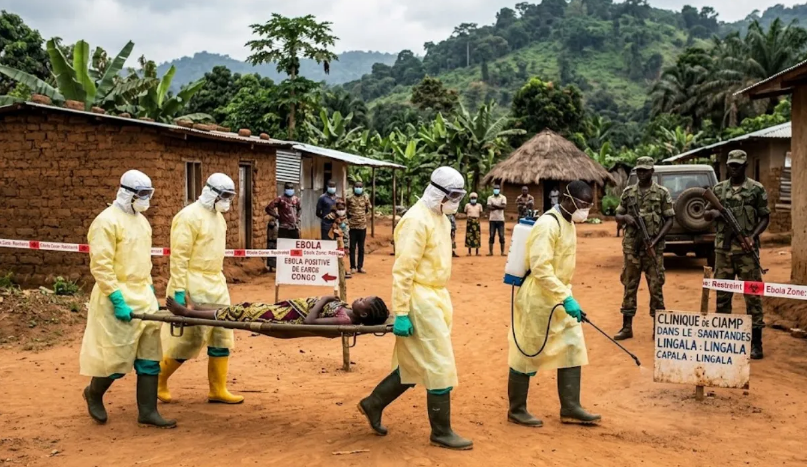
The Ebola outbreak in the Democratic Republic of the Congo has worsened significantly, with the death toll rising to 101 as the virus continues to spread rapidly across the country. According to the latest official figures released by the government, a total of 550 confirmed cases have been recorded so far. Authorities recently confirmed 35 new infections and 10 additional deaths linked to the outbreak.
The Congolese government officially declared the Bundibugyo strain of Ebola an epidemic on May 15. Health officials believe the virus may have entered the country from neighboring Uganda. The outbreak is primarily affecting Ituri Province, where the number of infections has increased sharply in recent weeks.
This marks the 17th Ebola outbreak in Congo since the virus was first identified in the country in 1976. Experts say delays in detecting initial cases played a major role in the rapid spread of the disease. Ebola is currently spreading across Ituri, North Kivu, and South Kivu provinces, raising concerns among health authorities.
Containment efforts have been complicated by the presence of armed rebel groups in affected regions such as Djugu, Irumu, and Mambasa. Nearly 120 armed groups are reportedly active across the three worst-hit provinces, creating major security challenges for medical teams. Ongoing violence, political conflicts, and instability have made it difficult to identify patients, enforce isolation measures, and provide treatment, posing a significant challenge to both the Congolese government and international health agencies.