





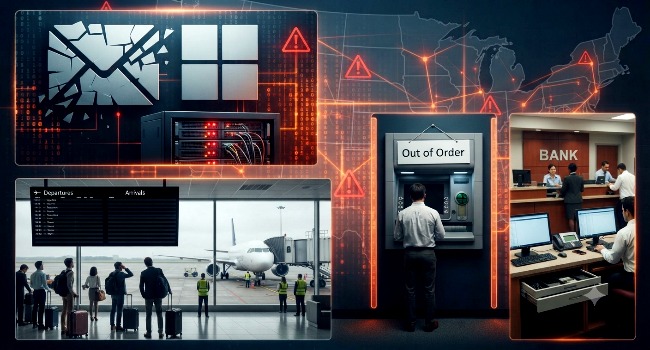
WASHINGTON: A series of technology failures across key US sectors this month, from email services to air travel and banking, has been dubbed “Nightmare November” in the tech world. Companies and officials said the disruptions stemmed from technical faults and infrastructure upgrade problems rather than cyberattacks. The incidents have renewed debate over the resilience of modern digital systems.
The disruptions began November 12, when Microsoft services including Office 365, Outlook, Teams and Copilot went down worldwide. The company said some servers went offline during an upgrade to expand network capacity while others were overloaded. Millions of users, including businesses, government agencies and airlines, were affected for more than 24 hours. Microsoft said the outage was not a cyberattack and had fully restored services by November 14.
On November 13, the Federal Aviation Administration halted flights nationwide. Officials attributed the stoppage to a newly installed router, set up by contractor L3Harris during a project to replace old copper lines with fiber in El Dorado, Arkansas, which overloaded the network. Seventeen air traffic control centers were affected. The roughly four-hour halt was reported to be the first of its kind since the September 11 attacks, and thousands of flights were canceled or delayed.
On November 16, a software bug at JPMorgan Chase disrupted account access, online transactions and ATM services, with effects also felt at partner banks Wells Fargo and Bank of America. Chase said the cause was a flaw in its on-premises systems, not a cyberattack. The same day, a web outage at United Airlines briefly disrupted pilot applications and crew communication systems. Separately, researchers said a flaw on the Optimizely platform allowed malware to reach the websites of 178 companies, including Zoom, the BBC and CNN. Although the incidents are unrelated, their timing has raised fresh questions about the reliability of the digital infrastructure on which people depend.