





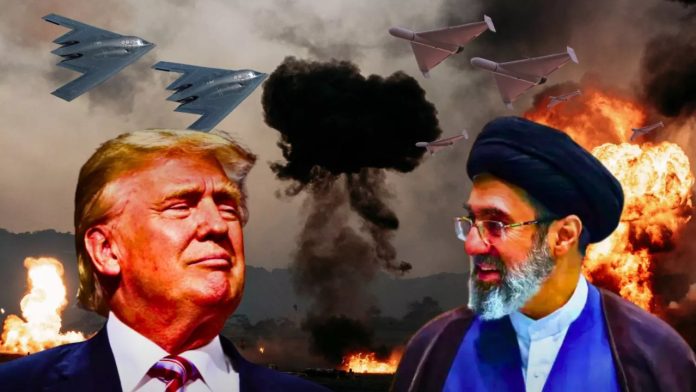
The prolonged conflict in the Middle East has emerged as a major challenge for Washington, with depleting military stockpiles and surging global oil prices placing President Donald Trump under mounting pressure. With midterm elections due in November, the administration is reportedly concerned that a continuing war could translate into significant political costs, amid a growing assessment that the extended engagement in West Asia has yielded more setbacks than strategic gains for the United States.
According to reports, Trump is now prepared to pursue a settlement with Iran even without insisting on what had until now been Washington’s central demand — a complete curb on Tehran’s nuclear program. Sources indicate he has told close aides that if Iran unconditionally reopens the Strait of Hormuz to shipping traffic, he would be willing to end hostilities even in the absence of a nuclear agreement.
Iran, for its part, has set out its own firm conditions for any peace deal. The closure of the Strait of Hormuz — a critical artery for global oil shipments — has driven crude prices sharply higher. Tehran has demanded the immediate lifting of U.S. economic sanctions and a complete withdrawal of American military forces from the region, stating unequivocally that the strait will not reopen until the war is permanently ended. This impasse is cited as the primary reason recent bilateral talks failed to make progress.
Iran’s military has simultaneously issued a sharp warning to Washington. Brigadier General Ali Jahanshahi stated that any attempt by U.S. forces to enter Iranian territory would trigger severe consequences, adding that Tehran would not tolerate violations of its sovereignty and that any retaliation would be forceful.
Publicly, Trump has downplayed the urgency of negotiations, suggesting Iran lacks the financial resources to sustain its position. Behind the scenes, however, reports suggest the administration may have little choice but to reverse course on its nuclear demands to secure an agreement.