





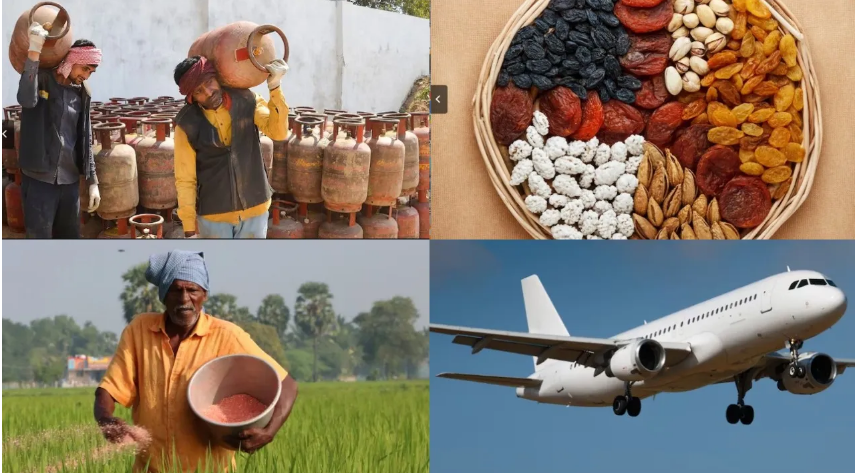
It goes without saying how directly political and military tensions arising in the Middle East — particularly in Gulf nations like Qatar, UAE, Oman, and Saudi Arabia — affect the common person’s kitchen and pocket. When a war-like atmosphere prevailed between the US and Iran, not just petrol and diesel prices, but everything from milk and vegetables to airline tickets became expensive in India. However, as these tensions now approach their conclusion, international markets are returning to normalcy. Here are the 10 key goods and services whose prices are set to fall significantly in India:
1. Cooking Gas & Commercial Cylinders (LPG)
India imports approximately 60% of its total LPG requirements from Gulf countries. During the conflict, prices of LPG’s key components — propane and butane — crossed $800 per metric ton in international markets. With tensions easing, these are likely to drop to the $550–600 range. This could reduce domestic household LPG cylinder prices by ₹70 to ₹100. However, since the government already subsidizes cylinders, it remains to be seen whether this benefit will be directly passed on to consumers.
2. Imported Fruits & Dry Fruits (Dates, Figs)
India imports approximately 90,000 to 1,00,000 metric tons of dates annually from Iran and other Gulf countries. Due to naval blockades on sea routes, wholesale prices of premium varieties like ‘Kimia’ and ‘Mazloom’ dates rose by 35–40% in Indian markets. Now that trade routes are reopening and supply normalizes, wholesale and retail prices of these items are likely to fall directly by 25–30%.
3. CNG & PNG
India imports nearly 50% of its total natural gas requirements in the form of LNG (Liquefied Natural Gas) from countries like Qatar and UAE. War fears pushed spot LNG prices to $15–18 per million British Thermal Units (MMBtu). Now that international gas prices show signs of falling to $9–10, domestic CNG and PNG prices could become cheaper by ₹4 to ₹6 per kg or SCM.
4. Fertilizers
India imports millions of tons of urea and phosphatic fertilizers, with Oman and Saudi Arabia being the largest suppliers. Supply chain disruptions pushed import costs up by $50–70 per ton. With the Strait of Hormuz shipping route reopening, fertilizer companies’ input costs are expected to fall by 12–15%. This will not only reduce the subsidy burden on the government but also completely resolve the domestic fertilizer shortage in open markets.
5. Plastics & Packaging Materials (Polymers)
The Indian plastics industry sources nearly 40% of its polymer and plastic granule requirements from Gulf petrochemical refineries. With crude oil prices reaching $125 per barrel, polymer prices rose by up to 20%. Now that crude oil has fallen back to a normal range of $75–80 per barrel, plastic input costs are expected to drop by up to 15%, directly bringing down packaging material prices.
6. Air Travel (Air Tickets)
Aviation Turbine Fuel (ATF) alone accounts for 40% of an airline’s total operating costs. With crude oil crossing $125, ATF prices hit record levels. A decline in crude prices will certainly bring ATF prices down by 10–12%, giving airlines room to reduce airfares by 8–10%.
7. Scrap Metal & Recycling Products
India imports millions of tons of aluminium and copper scrap annually from UAE and other Gulf countries. During the conflict, sea freight rates and war risk insurance premiums surged by up to 300%. With shipping routes returning to normal, freight charges are likely to drop by 30%, making raw materials 8–10% cheaper for domestic recycling units.
8. Industrial Sulfur
India heavily depends on sulfur imports, which are critical for the rubber and chemical industries. With Gulf supplies halted, domestic sulfur prices surged 18–22%. As refinery production normalizes and shipments resume, industrial sulfur prices could fall by up to 15%.
9. Paints & Coatings (Paints & Solvents)
Nearly 50% of the raw materials used in paint manufacturing — resins, solvents, etc. — are petrochemical derivatives. As crude oil and gas prices fall, paint companies’ total production costs will decrease by 6–8%. Companies are expected to pass on this benefit to consumers directly in the form of price reductions or discounts.
10. Online Delivery & Logistics Services
India’s logistics index is directly tied to fuel prices and operational costs. With the global energy crisis subsiding, the freight index is projected to fall by 7–10%. This will directly impact e-commerce companies (Amazon, Flipkart, etc.) and food delivery platforms (Swiggy, Zomato). As a result, common people can expect 5–8% relief on delivery charges and courier fees.