





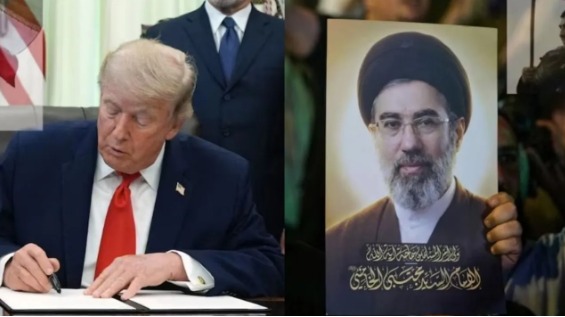
A historic agreement between the United States and Iran has been reached to end prolonged hostilities and reopen the strategically vital Strait of Hormuz. According to Pakistan, which mediated the deal, both countries will formally sign the agreement in Switzerland on Friday, June 19. For now, both sides have agreed to an immediate ceasefire and restoration of sea routes, while more sensitive issues including Iran’s nuclear programme will be taken up in later rounds of talks. Trump announced on social media that the Strait of Hormuz will be reopened toll-free and that the US naval blockade on Iran will be lifted. Iran’s Deputy Foreign Minister Kazem Gharibabadi also confirmed the deal on state television.
The 14 Key Conditions
The US will remove sanctions on Iran’s oil, petrochemicals, and related exports. Iran will regain full access to its frozen foreign financial assets. Frozen funds worth $24 billion will be released during the ongoing talks, with $12 billion to be released immediately as a first instalment. The US and its allies will draw up a $300 billion economic reconstruction plan for war-damaged Iran. A permanent ceasefire will come into effect across all regional conflict zones including Lebanon. The US will guarantee respect for Iran’s sovereignty and non-interference in its internal affairs. The US naval blockade will be fully lifted within 30 days. American military forces deployed around Iran’s borders will be reduced or fully withdrawn. The Strait of Hormuz will be reopened for normal shipping within 30 days. Formal talks will begin for 60 days to resolve pending issues including the nuclear programme and sanctions. Iran will reaffirm its commitment under the Non-Proliferation Treaty not to develop nuclear weapons. During the 60-day talks, the US will impose no new economic sanctions and deploy no additional military forces. An independent mechanism will be established to monitor implementation, and UNSC endorsement will be sought for the final agreement.
Notably, Iran’s missile programme and its support to regional armed groups have been excluded from the current deal’s scope. The critical condition is that final formal negotiations will only begin after the first instalment of $12 billion is released, oil sanctions are eased, and the naval blockade is lifted.
Why Past Talks Failed
Earlier rounds of negotiations between the two countries repeatedly collapsed over five core issues. On uranium enrichment, the US insisted Iran halt all enrichment while Iran argued it had the right to produce nuclear fuel for peaceful purposes. On the sequence of sanctions relief, Iran demanded all sanctions be lifted first while the US insisted Iran act on its nuclear activities first. On international inspections, the US wanted the IAEA to inspect all nuclear and military sites while Iran strongly opposed inspections of certain military facilities. On the missile programme, the US sought restrictions on Iran’s ballistic missiles while Iran refused, calling it a matter of self-defence. On regional influence, the US demanded Iran stop supporting armed groups in West Asia, which Iran rejected.
The 2015 JCPOA had resolved many of these issues by capping uranium enrichment at 3.67% and allowing international inspections in exchange for sanctions relief — but Trump’s unilateral withdrawal from that deal in 2018 unravelled the progress. The current 14-point framework, reached after both sides showed willingness to compromise, now offers a fresh path toward lasting peace in the Middle East.