





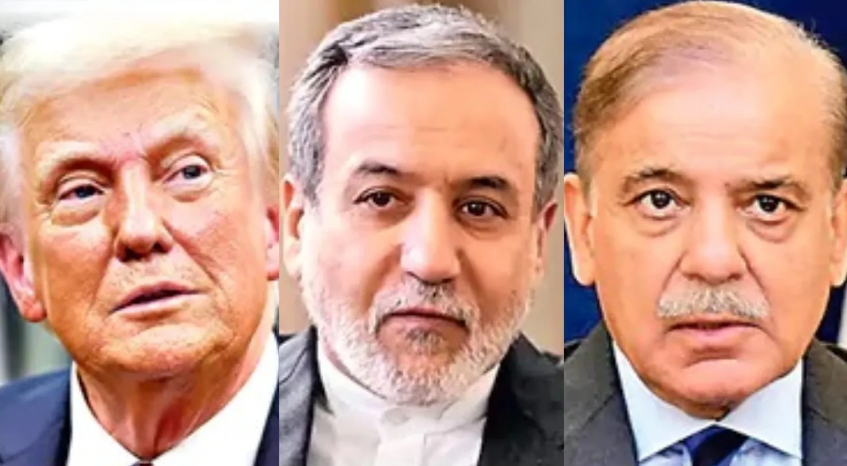
The long-running conflict between the United States and Iran appears to be approaching a decisive turning point, with key developments on Saturday signalling the possible end of hostilities in West Asia. President Donald Trump announced that everything is in place for a historic agreement with Iran, with a peace deal expected to be signed on Sunday, June 15, 2026. Trump stated on his Truth Social platform that the Strait of Hormuz — a critical artery for international trade — would reopen to all nations immediately upon the conclusion of the agreement.
Trump described the new deal as a robust barrier against Iran ever acquiring nuclear weapons, sharply contrasting it with the nuclear agreement reached under former President Barack Obama, which he said had made it far too easy for Iran to develop such capabilities. He added that American B-2 bombers had already destroyed Iran’s nuclear facilities, and that enriched uranium trapped beneath the collapsed granite mountains would be extracted once conditions stabilise and subsequently destroyed — either in the United States or within Iran itself. He expressed confidence that Iran would have no pathway to nuclear weapons going forward.
Pakistani Prime Minister Shehbaz Sharif, who mediated the peace process, also made a significant announcement on X, stating that the two sides were closer to peace than ever before and that the agreement was expected to be finalised within the next 24 hours. He expressed hope that the historic accord would lay a firm foundation for lasting stability in West Asia, adding that arrangements were in place for virtual signatures once the deal is confirmed.
Iran, however, struck a more measured tone. Foreign Ministry spokesperson Ismail Baghaei clarified that Iran would not be signing any agreement on Sunday, though he stopped short of ruling out developments in the days ahead, citing uncertainty about how the other side would proceed. Foreign Minister Abbas Araghchi separately indicated that preliminary talks are underway to end the war across all fronts, including Lebanon, but stressed that nuclear matters are not part of the current discussions — asserting that the nuclear issue would only be addressed 60 days after a preliminary agreement is reached.
On the domestic front, Iran officially announced the funeral schedule for Supreme Leader Ayatollah Ali Khamenei, who died during the early days of the conflict in joint US-Israeli airstrikes on February 28 this year. State media reported that funeral processions will commence in Tehran on July 4 and conclude in the city of Mashhad on July 9.
The conflict has also claimed Indian lives. Three Indian sailors aboard the commercial vessel MT Settebello were killed in US Navy strikes in the Gulf of Oman. External Affairs Minister S. Jaishankar, currently on a European tour, expressed strong outrage over the incident and spoke by phone with US Secretary of State Marco Rubio on Saturday, conveying India’s firm protest. He stated that lethal strikes on international commercial vessels are completely indefensible under any circumstances.
The US State Department responded by saying that Rubio made clear to Jaishankar that Washington would not tolerate the illegal transportation of Iranian oil in violation of the naval blockade imposed on the Strait of Hormuz. The United States further stated that all commercial vessels operating in the region are required to comply strictly with orders issued by US forces, and that non-compliance would invite severe consequences.