





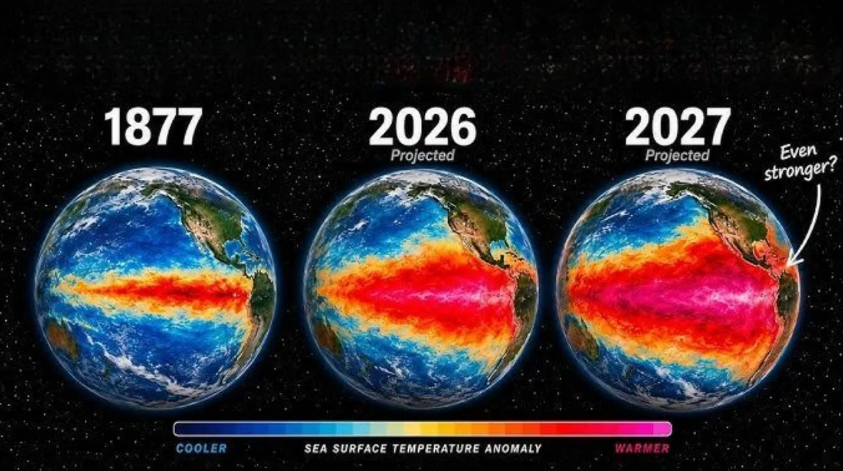
Climate scientists have warned that the world may soon experience one of the most powerful El Niño events in modern history, raising concerns over record-breaking temperatures and widespread weather disruptions across the globe.
The U.S. National Oceanic and Atmospheric Administration (NOAA) has cautioned that an exceptionally strong El Niño phenomenon could develop later this year. Due to its projected intensity, researchers have dubbed the event “Godzilla El Niño.”
El Niño is a naturally occurring climate pattern characterized by unusually warm sea-surface temperatures in the equatorial Pacific Ocean. Under normal conditions, surface waters in the region remain relatively cool. However, during an El Niño event, warm water from deeper ocean layers rises to the surface, significantly altering global weather patterns.
According to climate experts, the current warming trend in the Pacific Ocean differs from typical El Niño events. Large volumes of warm water are rapidly moving toward the ocean surface, prompting scientists to classify the developing phenomenon as potentially one of the strongest on record.
It’s the Geoengineering ⬇️
Climate scientists fear this frequent weather event will become a 'Godzilla' or 'Super El Niño' by the end of the year
…severe droughts and crop failures around the world, contributing to more than 50 million deaths globally pic.twitter.com/dhQJkFAxgp
— Vectom (@Osbournegreen) June 11, 2026
NOAA has warned that the event could intensify further in the coming months and reach peak strength by the end of the year. Statistical projections indicate a 63 percent likelihood that it could rank among the most powerful El Niño events recorded since 1950.
The warning comes as the planet continues to face the growing impacts of global warming driven by fossil fuel consumption and environmental pollution. Scientists fear that a powerful El Niño could amplify existing warming trends, pushing global temperatures to unprecedented levels.
Experts say the phenomenon could severely disrupt weather systems worldwide. While some regions may experience excessive rainfall, flooding, and storms, others could face prolonged drought conditions. Such extreme weather events could negatively affect agriculture, reduce crop yields, and threaten global food security.
Public health experts have also expressed concern over the potential consequences of prolonged heatwaves, including an increased risk of heat-related illnesses and the spread of infectious diseases. In addition, rising ocean temperatures could impact marine ecosystems and fisheries, affecting livelihoods dependent on the fishing industry.
Scientists continue to monitor conditions in the Pacific Ocean closely, warning that the coming months will be crucial in determining the intensity and global impact of the developing “Godzilla El Niño” event.