





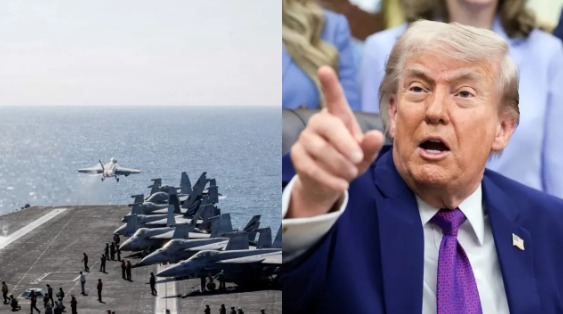
Reports Claim Tensions in West Asia continue to remain elevated as the fragile ceasefire between the United States and Iran shows limited progress toward a lasting peace agreement. Despite the temporary pause in hostilities, diplomatic efforts have failed to produce a comprehensive settlement, with both sides maintaining firm positions on key strategic issues.
Reports indicate that Iran has issued strong warnings stating it would respond with full force if subjected to renewed attacks. The developments come amid continued uncertainty over the future of the ceasefire, with concerns growing over a possible escalation in the region if diplomatic channels fail to deliver results.
Meanwhile, according to emerging reports, the United States is preparing contingency military strategies in case renewed action against Iran becomes necessary without prior congressional approval. One of the proposed operational frameworks is reportedly being referred to as “Operation Sledgehammer,” with additional code names also under review as part of internal planning discussions.
The developments follow earlier military action against Iran, referred to as “Operation Epic Fury,” which was carried out in coordination with Israel. That operation triggered retaliatory strikes by Iran on US military installations in Gulf countries, after which a ceasefire agreement was reached among the concerned parties, bringing a temporary halt to direct conflict.
Under US constitutional provisions, Congress retains authority over formal declarations of war, with the President required to notify lawmakers within 48 hours of initiating military action and seek authorization within 60 days. Reports suggest that any potential “Operation Sledgehammer” would involve precision strikes using stealth bombers, cruise missiles, and cyber warfare capabilities targeting Iran’s nuclear and military infrastructure, while avoiding direct ground troop deployment.