





Tensions between the United States and Iran have intensified further, with both sides escalating strategic and military posturing in the maritime domain. The Strait of Hormuz, a critical global oil transit route, remains at the center of the confrontation, as Washington advances its reported “Project Freedom” strategy to ensure open navigation, while Tehran insists it will not yield control unless US regional intervention is fully withdrawn.
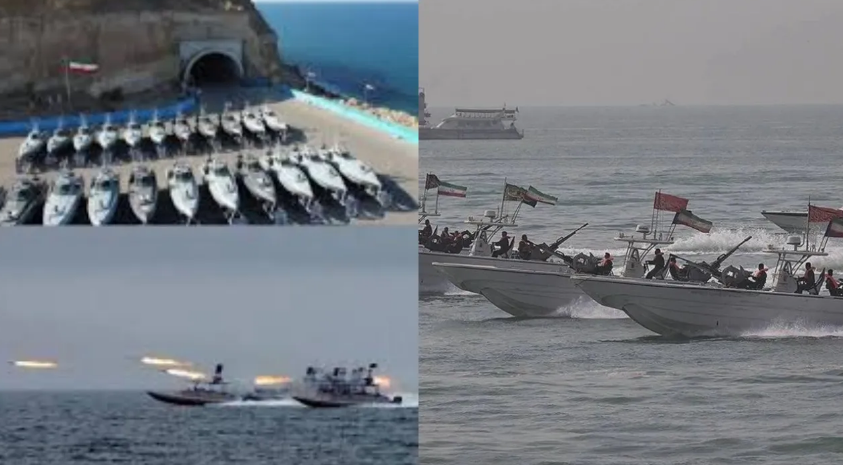
Amid this geopolitical standoff, Iran’s asymmetric naval doctrine—commonly referred to by defence analysts as the “Mosquito Fleet”—has drawn significant international attention. The term describes the Islamic Revolutionary Guard Corps (IRGC)’s deployment of hundreds of small, high-speed attack boats designed to operate in swarm formations, enabling them to challenge far larger and technologically advanced naval forces.
The strategy traces its origins to the 1980s Iran-Iraq war, when Iran shifted focus from conventional naval power to agile, low-cost maritime assets. Current assessments suggest that Iran operates nearly 1,500 fast boats, each difficult to detect using conventional radar systems and significantly cheaper to produce compared to advanced warships deployed by Western navies.
Iran’s maritime capabilities are further reinforced by a range of asymmetric weapons systems, including kamikaze suicide drones capable of carrying explosive payloads for direct impact attacks, surveillance drones for monitoring naval movements, and unmanned mine-clearing systems. Additionally, Iran is believed to operate approximately 300 missile-equipped fast boats armed with short-range guided missiles, along with underwater unmanned vehicles designed for covert operations beneath the sea surface.
Despite the United States maintaining overwhelming conventional naval superiority, defence analysts note that the Mosquito Fleet strategy presents a significant operational challenge in confined waterways such as the Strait of Hormuz. The deployment of expensive defensive systems against low-cost swarm attacks has added a new dimension to maritime warfare, with the ongoing standoff highlighting the growing role of asymmetric tactics in shaping modern naval conflicts in one of the world’s most strategically sensitive regions.